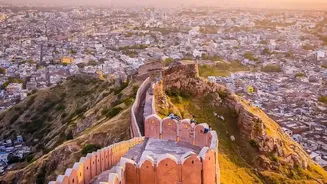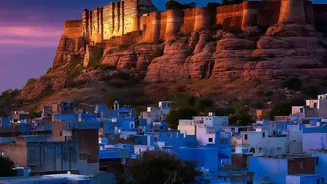




Mehrangarh Fort, Jodhpur
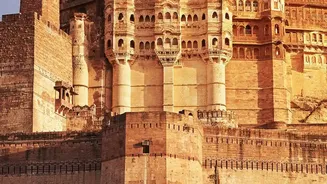
Towering over the Blue City, Mehrangarh is a testament to Rajput might and aesthetic finesse. Beyond its imposing walls, the fort houses a series of palaces, each a marvel of design. The Moti Mahal, or Pearl Palace, features glistening white plaster,
while the Phool Mahal (Flower Palace) is a study in opulent gold filigree and vibrant paintings. The most breathtaking feature is the latticed sandstone screens, or jalis. These are not merely decorative but are carved so thinly that they appear as delicate as lace, allowing royal women to observe court proceedings unseen while facilitating airflow in the arid climate.
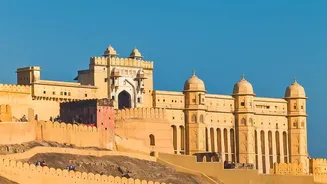
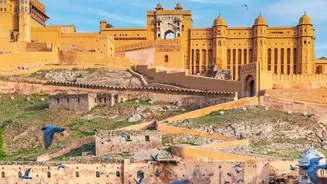
Amer Fort, Jaipur
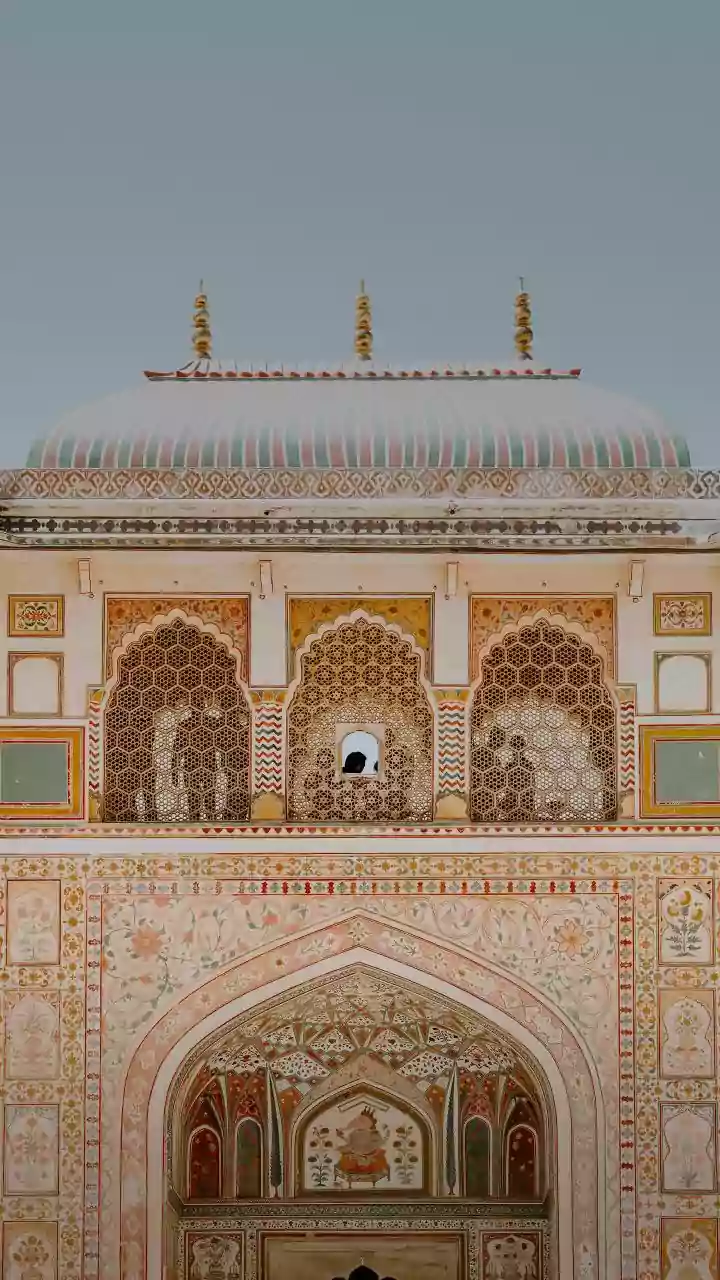
A stunning blend of Rajput and Mughal styles, Amer Fort is a romantic masterpiece. Its crowning jewel is the Sheesh Mahal, or Mirror Palace. The walls and ceilings of this hall are inlaid with thousands of tiny mirrors and coloured glass pieces. The design is so ingenious that a single flame can illuminate the entire room, creating the illusion of a star-filled sky—a request made by a queen who loved to sleep under the stars. The Ganesh Pol, an intricately painted gateway, is another highlight, serving as a magnificent entrance to the private palaces.
Jaisalmer Fort, Jaisalmer
Known as Sonar Quila or the Golden Fort, Jaisalmer is a living monument carved from yellow sandstone. The fort's walls seem to melt into the surrounding Thar Desert, glowing with a honey-gold hue at sunset. Unlike other forts, a significant portion of the city's population still resides within its walls, making it one of the few living forts in the world. The craftsmanship is evident in the havelis, or mansions, featuring exquisitely detailed balconies and windows. The delicate carvings and architectural harmony create a magical, almost ethereal atmosphere that feels suspended in time.
Red Fort, Delhi
A symbol of Mughal power and architectural zenith, the Red Fort in Delhi is a city within a city. Commissioned by Shah Jahan, its highlight of craftsmanship is the Diwan-i-Khas, or Hall of Private Audiences. This marble pavilion was once home to the legendary Peacock Throne. Its piers are inlaid with floral designs using precious stones, a technique known as pietra dura. Famously, a verse by poet Amir Khusrow is inscribed on its arches: "If there be a paradise on earth, it is this, it is this, it is this." The intricate water channels, known as the Nahr-i-Bihisht (Stream of Paradise), once flowed through the hall, cooling the air.
Agra Fort, Agra
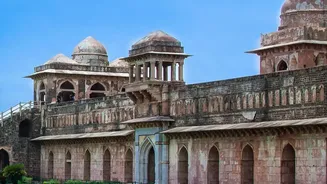
Often overshadowed by its famous neighbour, the Taj Mahal, Agra Fort is a masterpiece of Mughal design and craftsmanship in its own right. Initially a military structure of red sandstone built by Akbar, it was later transformed into a palace by Shah Jahan, who added delicate white marble structures. The fort demonstrates a fascinating fusion of Hindu and Islamic architectural styles. Within its walls, you'll find the Jahangir Palace, with its ornate stone brackets, and the Khas Mahal, a beautiful marble pavilion offering serene views of the Yamuna River.
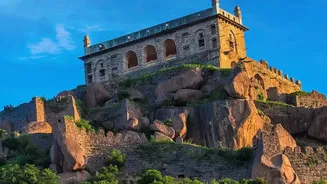
Gwalior Fort, Gwalior
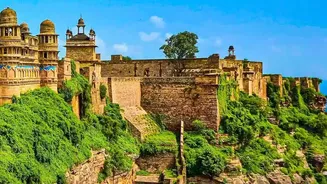
Referred to as 'the pearl amongst the fortresses of Hind' by the Mughal emperor Babur, Gwalior Fort has a long and storied history. Its most visually striking feature is the Man Singh Palace, built in the 15th century. The palace's exterior is adorned with brilliant blue, green, and yellow tiles arranged in geometric patterns and friezes depicting animals like ducks and elephants, creating a vibrant and unique facade that stands out among Indian forts. Inside, the intricate latticework and detailed carvings demonstrate the pre-Mughal craftsmanship that flourished under the Tomar dynasty.
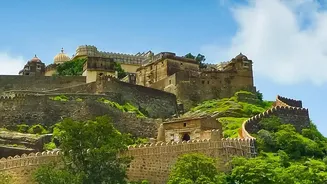
Chittorgarh Fort, Chittorgarh
As the largest fort in India, Chittorgarh is a sprawling symbol of Rajput pride and resilience. Its most iconic structure is the Vijay Stambha, or Tower of Victory, built by Rana Kumbha in 1448. This nine-story tower is not just a monument to a military victory but a sculptural encyclopedia. Its entire surface, both inside and out, is covered with intricate carvings of Hindu gods and goddesses, scenes from epics, and depictions of daily life. The level of detail across the entire structure is staggering, making it a singular achievement in Indian commemorative architecture.