








What Are Marine Heatwaves?
Think of a heatwave on land—a period of scorching, unbearable air temperatures. A marine heatwave is the same phenomenon, but in the ocean. It occurs when sea surface temperatures in a specific region climb abnormally high and stay there for at least
five consecutive days, often for weeks or even months. The Indian Ocean is the fastest-warming ocean basin in the world. Recent assessments show large parts of the Arabian Sea and Bay of Bengal are experiencing significant thermal stress, with temperatures soaring up to 4°C above normal in some locations. These are not just warm spells; they are extreme events that are becoming more frequent, lasting longer, and growing in intensity. In the Indian Ocean, the number of marine heatwave days has increased dramatically.
More Fuel for Powerful Cyclones
Warm water is the fuel that powers tropical cyclones. Sea surface temperatures of 28°C or higher create the perfect conditions for cyclones to form and strengthen. As the Indian Ocean heats up, it provides more energy for these storms. This leads to a dangerous phenomenon known as “rapid intensification,” where a cyclone can escalate from a less powerful storm to a severe or even super cyclonic storm in less than 24 hours. Cyclone Amphan, for example, intensified from a Category 1 to a Category 5 storm with shocking speed. Studies have observed a significant increasing trend in the intensity, frequency, and duration of severe cyclonic storms over the Arabian Sea in recent decades, a basin that was historically less active than the Bay of Bengal. This rapid strengthening leaves coastal communities with dangerously little time to prepare and evacuate.
Disrupting the Monsoon and Raising Sea Levels
The impact extends beyond cyclones. The intense warming of the Indian Ocean is disrupting the delicate balance of the Indian monsoon. Marine heatwaves in the western Indian Ocean and the Bay of Bengal have been linked to dry conditions over central India, while simultaneously causing excess rainfall in the southern peninsula. This creates a pattern of erratic weather, with long dry spells punctuated by intense, destructive downpours, threatening agriculture and water security. Furthermore, warmer water physically expands. This process, known as thermal expansion, is a major contributor to rising sea levels. Higher sea levels make coastal areas more vulnerable to flooding, erosion, and storm surges, putting cities like Mumbai, Chennai, and Kolkata at heightened risk.
An Ecosystem and Livelihood Crisis
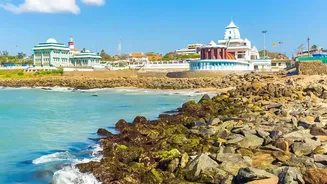
Beneath the surface, marine heatwaves trigger a cascade of ecological disasters. One of the most visible impacts is mass coral bleaching. When water gets too warm, corals expel the algae living in their tissues, causing them to turn white and starve. An event in the Gulf of Mannar saw 85% of corals bleached following a marine heatwave. This habitat destruction has a direct impact on India's fisheries, which support millions of people. Fish stocks like sardines and mackerel are forced to migrate to cooler, deeper waters, leading to sharp declines in catches for coastal fishing communities. The combination of unpredictable weather, fewer fish, and damage to coastal infrastructure poses a severe threat to livelihoods and food security along India's extensive coastline.