





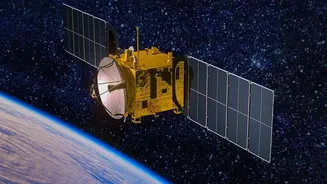


A Sky Full of Cheaper, Smarter Satellites
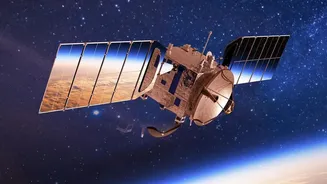
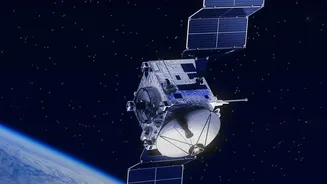
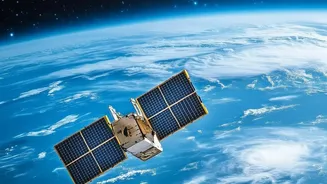
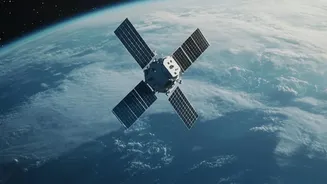
Not long ago, space was the exclusive domain of national governments. Today, a new space race is on, but this time it’s driven by private companies. Thanks to the miniaturisation of technology and dramatically lower launch costs, companies are deploying
vast constellations of small satellites into low-Earth orbit. This commercial expansion is supercharging Earth Observation (EO), the practice of gathering information about our planet from space. Market researchers project the global EO market will grow significantly, with some estimates suggesting it could reach over $18 billion by 2034. This isn't just about more pictures from space; it's about more frequent, higher-resolution data from a variety of sensors, including optical and radar, which can see through clouds and at night. This constant stream of data is creating an unprecedented digital portrait of our world.
AI: The Brains Behind the Eyes
The sheer volume of data beamed down from these satellite constellations would be overwhelming without another key technology: artificial intelligence. AI, particularly machine learning, is the engine that turns raw satellite imagery into actionable insights. Instead of humans manually scanning images for hours, AI algorithms can detect patterns, classify objects, and monitor changes with incredible speed and accuracy. These systems can track deforestation in the Amazon, predict crop yields in rural India, monitor air and water quality, and even detect the construction of new military sites. The integration of AI is so crucial that the market for imagery data analysis is now the dominant segment within the broader Earth observation industry, moving beyond raw images to AI-driven intelligence.
The Upside of a Watchful Eye
The benefits of this enhanced global transparency are enormous. For disaster management, near real-time imagery can help first responders assess damage from floods, wildfires, and earthquakes, saving lives and resources. In agriculture, it enables precision farming, helping farmers optimize water and fertilizer use to improve yields. Climate scientists use this data to monitor melting ice caps, track greenhouse gas emissions, and measure the impact of environmental policies. Furthermore, commercial satellite imagery has become a powerful tool for journalists and human rights organizations, allowing them to independently verify events in conflict zones and hold governments and corporations accountable for their actions.
Governance in the Final Frontier
However, this technological leap is rapidly outpacing the laws designed to govern it. The existing international space law framework, largely developed during the Cold War, was designed for a handful of state actors, not a crowded field of private companies. This creates a 'Wild West' scenario with significant gaps in regulation. Urgent questions about data privacy, surveillance, and national security are mounting. Who owns the data collected by a private satellite? What rights do individuals or nations have when they are being observed? There are also concerns about the potential for misuse, such as corporate espionage or the use of imagery to create disinformation. International bodies like the United Nations Office for Outer Space Affairs (UNOOSA) are calling for ethical guidelines to ensure AI is used responsibly and that robust data ownership and privacy rules are established.
India's Stake in the Stars
For India, this global trend presents both a challenge and a massive opportunity. The Indian government has been actively encouraging private sector participation in its space program. The Indian Space Policy 2023 and liberalised Foreign Direct Investment (FDI) rules aim to grow the country's share of the global space economy from its current value of around $8.4 billion to over $40 billion in the next decade. From just one registered space start-up in 2014, India now has around 450. This push includes encouraging private constellations for Earth observation. These reforms are designed to let ISRO focus on advanced research while the private sector scales up commercial applications. However, experts note that a dedicated Space Act is still needed to address critical issues like liability and provide a clear legal framework for this booming private industry.