





What is the 2027 Prediction?
The major risk flagged by scientists at the University of Miami's prestigious Rosenstiel School is the potential for the planet to temporarily exceed a critical climate threshold. According to their latest projections, there is a significant chance—estimated
between 35% and 40%—that for at least one month in early 2027, the global average temperature will spike more than 2 degrees Celsius above pre-industrial levels. This would be the first time in recorded history such a breach has occurred. While it would be a temporary event, not a permanent state, crossing this line is a sobering milestone in the planet’s ongoing battle with climate change, offering a real-world preview of what a consistently warmer world might feel like. It acts as a fire alarm for the entire global system.
The Science Behind the Spike
This forecast isn't based on a single factor but on the collision of two powerful forces: long-term global warming and a particularly strong natural climate pattern. The underlying cause is the steady increase in global temperatures due to greenhouse gas emissions. Layered on top of that is a powerful El Niño event, which is currently forecast to be one of the strongest on record. El Niño is a natural phenomenon in the Pacific Ocean that releases a vast amount of heat into the atmosphere, temporarily driving up global temperatures. When you combine the extra heat from a supercharged El Niño with the already elevated baseline temperature from decades of climate change, you get the conditions for a potential record-breaking spike in early 2027.
A Glimpse of a 2-Degree World
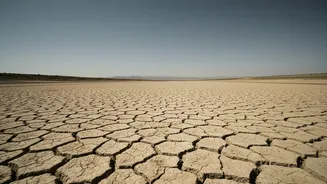
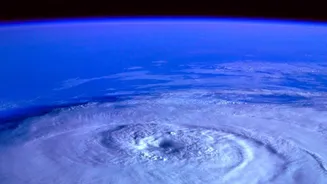
Breaching the 2-degree Celsius mark, even for a month, is more than just a number. It is a preview of the increased frequency and intensity of extreme weather events that scientists have long warned about. This level of warming can fuel more destructive heatwaves, disrupt rainfall patterns leading to both droughts and floods, and put immense stress on ecosystems and agriculture. Researchers noted that the recent acceleration in temperature rise might also be linked to a reduction in aerosol pollution, which previously had a masking effect, hiding some of the warming. In effect, as our air gets cleaner from some pollutants, the raw, underlying impact of greenhouse gases becomes more apparent. This temporary breach would serve as an undeniable, real-world demonstration of the future we are heading toward if emissions are not drastically reduced.
A Global Risk, a Local Reality
While the research comes from Miami, the implications are global and resonate strongly across India. India, with its vast and densely populated coastline, is exceptionally vulnerable to the twin impacts of rising temperatures and rising seas. An event like a temporary 2-degree breach would likely manifest here as more intense heatwaves across the subcontinent and potentially erratic monsoon behavior. Furthermore, the same University of Miami scientists have been at the forefront of researching another compounding risk: accelerated sea-level rise and coastal flooding. Their work on 'king tides'—exceptionally high tides that are becoming higher and more frequent due to rising sea levels—shows what coastal cities like Mumbai, Chennai, and Kolkata will increasingly face. These 'sunny-day floods' are a direct consequence of a rising ocean, a process that will only be exacerbated by higher global temperatures.
An Astronomical Threat on the Horizon
Adding another layer to the long-term risk is a predictable, natural cycle known as the lunar nodal cycle. This 18.6-year 'wobble' in the moon's orbit affects the tides. For about half the cycle, it suppresses tides, and for the other half, it amplifies them. We are currently in the suppressive phase, which has been masking the full effect of sea-level rise. However, this phase is ending, and we will soon enter the amplification part of the cycle. Starting in the mid-2030s, this lunar effect will align with decades of sea-level rise, causing a dramatic increase in the number and severity of high-tide flooding events along coastlines worldwide. Early 2027, therefore, sits on the cusp of this new era, where astronomical cycles and climate change combine to create a perfect storm for coastal communities.