




The Core Challenge Explained
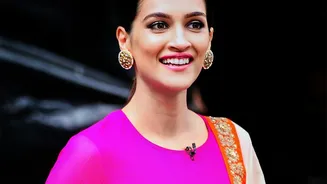
In a video shared by her trainer, Kriti Sanon performs an advanced core exercise that involves hanging from an overhead bar while rapidly kicking a stability ball. This movement, a variation of a hanging flutter kick, is incredibly demanding. It tests
grip strength, shoulder stability, and core control, all while requiring precise coordination to repeatedly strike the ball. The primary challenge isn't just kicking the ball; it's preventing the lower body from swinging wildly. This requires immense abdominal engagement to keep the torso and pelvis stable while the legs are in constant motion. Sanon is seen with a trainer supporting her waist, highlighting the level of control and assistance needed to perform the exercise safely and effectively.
Why This Isn't a DIY Home Exercise
Attempting this move without a strong fitness foundation can lead to injury. The exercise places significant strain on the shoulders, grip, and lower back. Without adequate core strength, most people will rely on momentum, swinging their bodies instead of controlling the movement with their muscles. This not only negates the core-strengthening benefits but also increases the risk of shoulder or back strain. The trainer's presence is crucial for two reasons: providing physical support to ensure proper form and offering immediate feedback to prevent the body from developing unsafe movement patterns. The stability ball itself adds a layer of complexity that requires a high degree of body awareness. For anyone working out alone at home, this combination of hanging and instability is best avoided.
Foundation First: Build Your Core on Solid Ground
Before you even think about adding an unstable element like a stability ball, it's vital to master the basics. A strong core is the foundation of all advanced movements. Start with floor-based exercises like the plank. Holding a plank with proper form—maintaining a straight line from head to heels—builds the deep core stabilizers necessary for more complex exercises. Once you can comfortably hold a plank, progress to crunches and bicycle crunches, which target the rectus abdominis and obliques. These foundational moves teach your body to engage the correct muscles without the added challenge of instability, preparing you for the next step.
Beginner Mod: Stability Ball Crunches and Planks
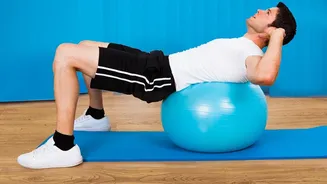
Once you're ready to introduce the ball, start with simple movements. The stability ball crunch is a great entry point. By lying with your lower back supported by the ball and your feet flat on the floor, you force your core to work harder to maintain balance as you crunch. Another excellent beginner exercise is the stability ball plank. Placing your forearms on the ball while holding a plank position introduces instability in a controlled way, challenging your shoulder and core stabilizers more than a standard plank. These exercises help your body adapt to the unique demands of the ball without the high risk of the hanging variation.
Intermediate Step: Stability Ball Knee Tucks
The stability ball knee tuck, also known as a jackknife, is the perfect bridge to more advanced moves. Start in a push-up position with your hands on the floor and your shins resting on the stability ball. Your body should form a straight line. From here, brace your core and use your abs to pull your knees towards your chest, allowing the ball to roll forward with you. Pause, and then slowly extend your legs back to the starting position. This move directly mimics the core action of the advanced pike but is far safer, as your hands are firmly on the ground, providing a stable base of support.
Advanced At-Home Version: The Stability Ball Pike
If you have mastered the knee tuck and have significant core strength, you can progress to the stability ball pike. The starting position is the same as the tuck. However, instead of bending your knees, you keep your legs straight and lift your hips towards the ceiling, rolling the ball towards your hands with your feet. Your body will form an inverted 'V' shape. The key is to move slowly and with control, avoiding any arching in your lower back. This full-body exercise strengthens the core, shoulders, and chest while improving balance. It delivers many of the benefits of Kriti's hanging exercise but in a much more accessible and safer format for a home setting.