





The Goal: Reviving the Nuclear Deal
The entire negotiation is centered on reviving a version of the 2015 Joint Comprehensive Plan of Action (JCPOA). That landmark agreement limited Iran's nuclear program in exchange for lifting crippling economic sanctions.. The deal fell apart in 2018
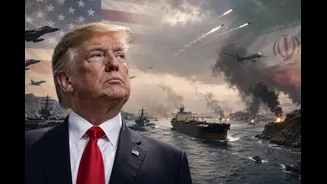
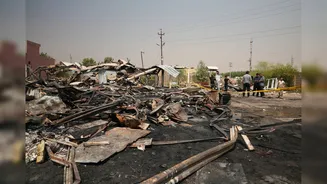
when the United States unilaterally withdrew and reimposed sanctions.. In response, Iran began to systematically break the deal's limits, enriching uranium to levels far beyond what was permitted and much closer to what is needed for a weapon.. Now, after a turbulent period that included direct military conflict in early 2026, diplomats are trying to put the pieces back together, but the old trust is gone..
What Iran Wants: Sanctions Relief First
From Tehran's perspective, the United States broke the original deal, so it cannot be trusted to follow through on its promises. Iranian officials have been clear: they want sanctions relief first, before they take major steps to dismantle their expanded nuclear program.. Their argument is that they already fulfilled their side of the bargain once, only to have sanctions snapped back on, devastating their economy.. They are demanding a guaranteed, verifiable, and immediate lifting of sanctions, including the release of billions in frozen funds, before they will scale back their nuclear activities.. To them, offering compliance without sanctions relief is like walking into the same trap twice..
What the US Wants: Compliance First
Washington sees the situation from the opposite angle. American officials argue that Iran cannot be rewarded with economic relief while it is actively violating the terms of the original agreement and enriching uranium to near-weapons-grade levels.. The US position is that Iran must first come back into full, verifiable compliance with its nuclear obligations.. This means halting high-level enrichment, shipping out or diluting its stockpile of enriched uranium, and providing full access to international inspectors to confirm that all activities are peaceful.. Only after these steps are taken and verified would the US begin to lift its most significant sanctions.. They will not pay, they argue, for promises that may not be kept.
The 'Chicken and Egg' Dilemma
This is the 'sequence problem' in a nutshell. It’s a diplomatic 'chicken and egg' scenario rooted in a profound lack of trust. Neither side is willing to take the first step and make itself vulnerable.. Iran fears that if it gives up its nuclear leverage, the US will find new reasons to delay sanctions relief. The US fears that if it lifts sanctions first, Iran will pocket the economic benefits and refuse to follow through on its nuclear promises. This deadlock over the first move—the precise sequencing of who does what, and when—has become the central obstacle.. It turns a political promise into an operational plan, and right now, neither side can agree on the blueprints..
Why A Simultaneous Swap Won't Work
A common suggestion is for both sides to act simultaneously. However, this is far more complex than it sounds. Verifying that Iran has dismantled centrifuges or diluted its uranium stockpile takes time and careful inspection by the International Atomic Energy Agency (IAEA).. In contrast, lifting sanctions can be done with the stroke of a presidential pen, but its economic effects are not instantaneous. This creates an imbalance. How do you coordinate a multi-week technical process with an immediate legal one? The deep-seated mistrust means that neither side is willing to grant the other even a temporary advantage. Any attempt to choreograph the steps has so far failed because the process itself is seen as a test of credibility that both sides expect to fail..
The High Stakes of Failure
The failure to solve this sequencing puzzle carries immense risks. If diplomacy remains stalled, Iran's nuclear program will continue to advance, further shortening the time it would need to develop a nuclear weapon.. This raises the likelihood of military action from the United States or Israel to prevent a nuclear-armed Iran, a scenario that could trigger a devastating regional war with global economic consequences, particularly for oil markets.. The current standoff is not just a diplomatic headache; it is a crisis that keeps the entire Middle East on a knife's edge and risks spiraling into a broader conflict..