




The Five-Year Horizon
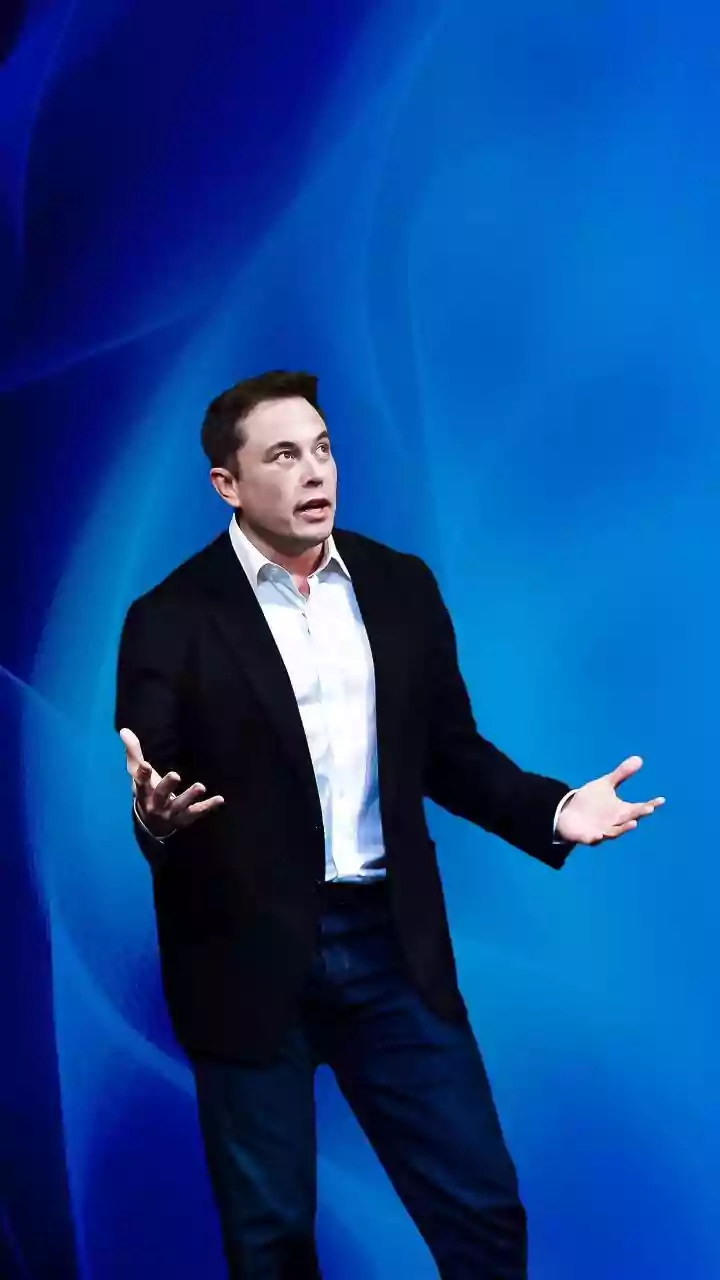
In a recent interview in July 2026, Elon Musk stated his belief that AI is on a trajectory to exceed the sum of all human intelligence by around 2031. Speaking to The Economist, the head of Tesla, SpaceX, and xAI suggested that there will soon be nothing
that AI cannot do better than humans, with the possible exception of simply 'being human'. This isn't the first time he's made such a claim; he has consistently moved his timeline forward, previously targeting 2029. His latest prediction, however, is his most aggressive yet, suggesting an unstoppable momentum behind AI's development. He framed this less as a doomsday prophecy and more as the dawn of an "age of amazing abundance," where resource scarcity could become a thing of the past.
What is AI Superintelligence?
To understand Musk's claim, it's crucial to distinguish between different types of AI. The AI most of us interact with today is known as Narrow AI; it's designed for specific tasks like language translation or playing chess. The next step is Artificial General Intelligence (AGI), a hypothetical form of AI that could understand, learn, and apply its intelligence to solve any problem a human can. Musk's prediction goes even further, to the concept of Artificial Superintelligence (ASI). ASI is an intellect that would be much smarter than the best human brains in practically every field, including scientific creativity, general wisdom, and social skills. Musk’s claim is that ASI will not just be smarter than any one person, but smarter than the 8 billion-plus human brains on the planet put together.
An Accelerating Race
Musk's accelerated timeline is fueled by the rapid, visible progress in the field. Companies like OpenAI, Google DeepMind, and his own xAI are locked in a fierce competition, pouring billions into developing more powerful models. These models are already demonstrating capabilities that were considered science fiction just a few years ago. Musk has argued that this progress is now moving beyond the control of any single person or company. He believes this rapid development will be enabled by solving two key bottlenecks: the supply of advanced AI training chips and the massive electrical power required to run them. The fierce competition and vast investment are compressing development cycles, making previously distant milestones seem suddenly achievable.
What Do Other Experts Think?
Musk is not alone in his bullish predictions, though his timeline is on the more optimistic end of the spectrum. Demis Hassabis, CEO of Google DeepMind, has also suggested that AGI could arrive within years, possibly around 2030. Nvidia CEO Jensen Huang predicted in 2024 that AI would match human performance on a wide range of tests by 2029. However, many experts remain more cautious. Broader surveys of thousands of AI researchers have historically placed the median estimate for AGI arrival between 2040 and 2060, though these timelines have been shortening in recent years. Others, like Meta's chief AI scientist Yann LeCun, are skeptical that the current approach of building ever-larger language models will lead to true, human-like intelligence at all, suggesting a fundamental breakthrough is still needed.
Abundance or Obsolescence?
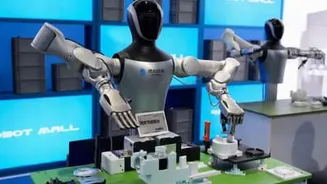
The implications of Musk’s prediction are profound, painting a picture of two potential futures. The optimistic view, which Musk himself now leans towards, is a world of incredible prosperity. ASI could solve humanity's most complex problems, from curing diseases to mastering fusion energy. In this scenario, humanoid robots like Tesla's Optimus could eliminate dangerous and tedious labour, creating a world where goods and services are virtually free. The darker side of this coin is the existential risk that has long worried Musk and others. If a superintelligence emerges that is vastly more capable than us, would humanity remain in control? Musk himself expressed doubts, comparing the potential relationship to that between humans and chimpanzees and admitting it's "unlikely" we would remain in charge. This raises urgent questions about safety, control, and ensuring that any superintelligent entity remains aligned with human values.