






A New Leader in the Skies
For the first time since its opening in 2001, Seoul’s Incheon International Airport has become the world's busiest hub for international passengers. According to preliminary data from Airports Council International (ACI) for the first half of 2026, Incheon handled
an impressive 38.39 million international travellers. This pushed London's Heathrow, with 37.79 million passengers, into second place, while the long-reigning Singapore Changi ranked third with 34.53 million. This represents a significant reshuffling of the global aviation map, highlighting a rapid ascent for an airport that has methodically climbed the ranks from 10th place just after it opened to the top spot today.
Geopolitics and Shifting Routes
A key factor in Incheon's recent surge is the shifting landscape of global geopolitics. The conflict in the Middle East has disrupted operations at major transit hubs like Dubai, causing some airlines and passengers to seek alternative routes for travel between Europe and Asia. Incheon has emerged as a prime beneficiary of this shift. The airport saw a dramatic 18.1% increase in transit passengers, with traffic on European routes soaring by over 63%. This ability to absorb diverted demand underscores its growing importance as a stable and efficient global crossroads, connecting 183 cities through 101 different airlines.
The Incheon Advantage: Innovation and Experience
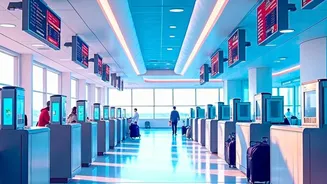
While global events provided a tailwind, Incheon's success is built on a long-term strategy of innovation and an obsession with passenger experience. In the 2026 Skytrax World Airport Awards, Incheon was ranked the world's second-best airport overall, just behind Singapore Changi, and was named the 'World's Most Family-Friendly Airport'. Travellers praise its seamless efficiency, cleanliness, and unique amenities. The airport deploys AI-powered robots that provide guidance, carry luggage, and even deliver food to your gate. It also features cultural experiences, indoor gardens, and an AI-based system that predicts passenger flow to reduce congestion, ensuring a smooth journey from check-in to boarding.
Changi and Heathrow: Still Powerhouses
Despite being overtaken in international passenger volume, both Changi and Heathrow remain formidable airports. Changi was once again named the 'World's Best Airport' in the 2026 Skytrax awards, a title it has won 14 times, thanks to its breathtaking Jewel complex, world-class dining, and unparalleled passenger services. Its focus on creating a destination-worthy experience continues to set industry standards. Heathrow, while facing capacity constraints, remains a critical hub for transatlantic travel and a leader in airport shopping. However, Incheon's recent victory in passenger numbers highlights a new competitive dynamic where sheer volume and strategic location, combined with technological prowess, are rewriting the rules.
Built for the Future
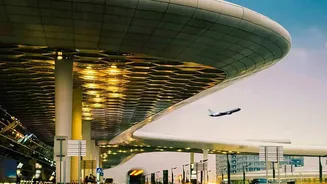
Incheon's rise was not accidental; it was engineered. Following a massive four-phase expansion completed in late 2024, the airport now has capacity for 106 million passengers annually. This makes it the third-largest in the world by capacity, giving it ample room to accommodate further growth. With 111 boarding gates and two state-of-the-art terminals, the airport was built not just for today's traffic but for the future of aviation. This forward-thinking infrastructure, combined with its strategic efforts to become a global leader in hydrogen mobility and AI innovation, positions Incheon to be a dominant force for years to come.