




Why Breathing Matters on the Trail
Good breathing is fundamental to your well-being on a hike. Your muscles require a steady supply of oxygen to function optimally, especially during sustained effort. When that supply drops, you feel breathless, fatigued, and can even get dizzy. Shallow
chest breathing, a common habit, is inefficient and can trigger a stress response. Deep, diaphragmatic breathing, on the other hand, allows for a fuller oxygen exchange. This process helps slow your heart rate, stabilize blood pressure, and promotes a sense of calm, making your hike more enjoyable and less strenuous. Studies suggest that nasal breathing, in particular, improves ventilatory efficiency and can make exercise feel less taxing on the body. It also activates the parasympathetic nervous system, which aids in recovery and reduces stress.
The Foundation: Diaphragmatic Breathing
Before you can sync your breath to your stride, it helps to understand the basic mechanics of deep breathing. This technique is often called diaphragmatic or 'belly' breathing. The diaphragm is a large muscle at the base of your lungs that should be the primary driver of your breath. To practice, you can lie down with one hand on your chest and the other on your stomach. As you inhale slowly through your nose, focus on making your stomach rise while your chest remains relatively still. Exhale slowly, feeling your stomach fall. We are all born breathing this way, but stress and habit often shift us to less effective chest breathing. Relearning this technique strengthens the diaphragm, improves core stability, and enhances your ability to tolerate exercise.
On Easy Terrain: Finding Your Rhythm
On flat or gently rolling trails, you can pair your breath with your steps without slowing down. The key is to find a sustainable rhythm. A good starting point is to inhale through your nose for two or three steps, and then exhale for the same count. This is often referred to as rhythmic breathing, and it helps conserve energy and increase endurance. Breathing through your nose is particularly effective at moderate intensities. It warms and filters the air, increases oxygen absorption, and helps you stay calm and focused. While it might feel restrictive at first, nasal breathing can often maintain performance because the body uses the oxygen more efficiently. The goal is to establish a smooth, consistent flow that feels natural and keeps you from gasping for air.
Adapting to the Climb: When to Change Your Breath
Steep climbs and technical terrain change the equation. As the intensity increases, your body's demand for oxygen skyrockets, and strictly nasal breathing may become insufficient. This is where trail difficulty dictates your effort and breathing style. As you approach an incline, it’s wise to slow your pace before you become breathless. On hills, you will need to switch to a more powerful breathing pattern, often involving your mouth. While nasal breathing is great for efficiency, oral breathing delivers a higher volume of air quickly. A common technique is to breathe in through your nose and then exhale forcefully through your mouth, sometimes with pursed lips to control the outflow. Your rhythmic count will likely shorten; you might move to a two-step inhale and a one-step exhale, or even a breath for every step. The priority is to avoid oxygen debt by matching your breath to the demanding effort.
Posture and Listening to Your Body
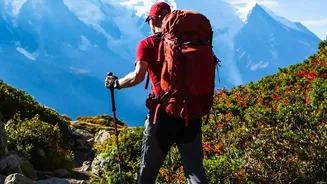
No breathing technique will be effective if your posture is poor. Walking hunched over, especially with a heavy pack, can compress your lungs and restrict their ability to expand fully. Consciously standing tall with your shoulders back creates more space for your diaphragm to work, making every breath easier and more effective. Ultimately, these techniques are guidelines, not rigid rules. The most important skill is learning to listen to your body. If you find you can't maintain a controlled breathing pattern, it's a clear sign to slow down until you can recover. The goal isn't to force a specific technique but to use your breath as a tool to manage effort, stay present, and enhance your connection to the trail.