







The National Average vs. Your Local Reality
We often hear about the national Consumer Food Price Index (CFPI), which tracks the average change in the price of food items. For instance, in June 2026, India's food inflation was recorded at 5.32%, an increase from previous months, signalling that
prices are broadly on the rise. This figure, however, is a national average. It smoothens out the sharp peaks and troughs experienced in different regions. While one state might see a modest increase, another could be grappling with skyrocketing prices for the same items. Recent data shows that rural food inflation often outpaces urban inflation, highlighting that even within a state, the experience is not uniform. This means a budget that works wonders in one city might be completely unrealistic just a few hundred kilometres away.
A Tale of Two Kitchens: Price Gaps in Your Basket
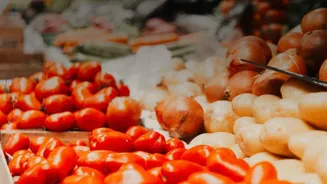
Let's look at some staples. In recent months, tomato prices have surged in some areas, with inflation for the vegetable hitting over 30%. At the same time, potato prices have dropped significantly in other regions. A family in Mumbai might find cauliflower prices have remained stubbornly high even when wholesale rates drop, due to local supply chain issues and spoilage from extreme heat. Meanwhile, a household in Ranchi could see the price of onions and potatoes jump by 25% in a matter of days, directly linked to a hike in local diesel prices that increases transport costs from nearby districts. These are not just small fluctuations; they represent significant differences in household expenditure. A weekly menu that heavily features tomatoes would be far more expensive in a city experiencing a price surge compared to one where prices are stable.
Why Your Local Sabzi Mandi Costs More (or Less)
Several factors drive these regional price differences. The most significant are supply chain inefficiencies and local conditions. India's agricultural system is vast and fragmented. The distance food travels from the farm to your plate involves multiple intermediaries, and each adds a layer of cost. Transportation expenses, which are directly affected by fluctuating fuel prices, play a massive role. Local weather is another huge factor. An unseasonal heatwave in one region can decimate a crop like leafy greens or tomatoes, leading to a supply crunch and immediate price hikes at the local mandi. Furthermore, reliance on specific APMC markets, varying state-level taxes, and even hoarding can create price disparities that defy national trends.
Building a Smarter, Local-First Menu
Given this volatility, a rigid, one-size-fits-all weekly menu is bound to fail. The key to managing your food budget is to become a more flexible and informed shopper. Instead of planning your meals and then shopping for the ingredients, try reversing the process. See what's fresh, affordable, and abundant at your local market first, and then build your menu around those items. This 'market-first' approach allows you to naturally take advantage of what's in season and locally produced, which is almost always cheaper. It requires a shift in mindset from 'What do I want to eat?' to 'What's good and affordable to eat this week?' This flexibility allows you to sidestep the items that have become temporarily expensive in your specific area.
Strategies for a Resilient Kitchen
To make this approach work, embrace versatility. Learn a few basic cooking methods that can be adapted to different vegetables. For example, a good stir-fry, curry base, or sabzi recipe can work with whatever vegetables are cheapest this week—be it cabbage, gourds, or beans. Secondly, pay attention to local patterns. You'll soon notice which vegetables are consistently affordable in your area and which are prone to price shocks. Stocking up on non-perishable staples like pulses and grains when they are on sale provides a solid foundation for your meals, allowing you to spend less on pricier items. Finally, talking to your local vegetable vendor can provide invaluable insights. They often know which items are fresh, in good supply, and likely to offer the best value for the next few days.