

The Birth of a Legend
The story of Sandesh is a tale of culinary fusion. While a sweet named 'sandesh' existed in medieval Bengali texts, it was likely made from kheer (reduced milk), not the chhana (fresh cheese curds) we know today. The pivotal change came with the arrival
of Portuguese settlers in the 16th and 17th centuries. Before then, deliberately curdling milk was considered inauspicious. The Portuguese, with their cheese-making skills, introduced the technique of breaking milk with acid. Bengali confectioners, known as 'moiras', ingeniously adapted this method to create chhana, laying the foundation for an entirely new generation of sweets. By the 19th century, the chhana-based Sandesh had become a cornerstone of Bengali culinary identity, championed by legendary sweet shops like Bhim Chandra Nag, founded in 1826.
From Humble Balls to Hand-Shaped Art
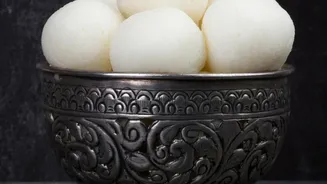
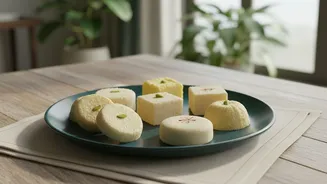
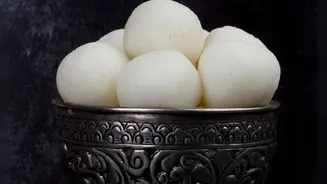
In its earliest and simplest form, the chhana was lightly tossed with sugar over low heat to create 'makha sandesh' (kneaded sandesh). When rolled into simple spheres, it was called 'Kanchagolla', meaning 'raw ball'. But soon, the artistry of the 'moiras' came to the fore. They began to shape the sweet by hand into various forms, with the artisan's skill determining the final product's finesse. This was a time of pure craftsmanship, where each piece was a unique creation, a testament to the maker's experience and steady hand. These simple, hand-shaped forms were the first step in Sandesh's visual evolution, turning a basic sweet into a small piece of edible art.
The Era of Intricate Moulds
The 19th century witnessed a major leap in Sandesh's presentation with the widespread adoption of moulds, or 'chhaanch' in Bengali. Initially, these were often homemade from stone or terracotta, with women carving designs themselves. As sweet shops grew in prominence during the Bengal Renaissance, a cottage industry emerged, producing intricately carved wooden moulds from durable teak, mahogany, and sheesham wood. These moulds allowed for stunningly detailed and uniform designs like fish, conch shells ('shankha'), lotuses, and elephants, each often carrying cultural or auspicious symbolism. This innovation standardised production and elevated the sweet's aesthetic appeal, making it a centrepiece for festivals and celebrations.
A Revolution in Flavours
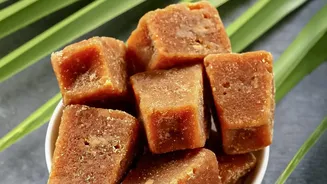
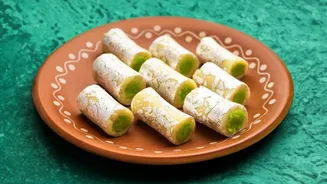
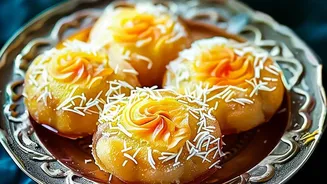
While shape was evolving, so too was the flavour. The classic Sandesh relied on the purity of chhana and sugar, sometimes scented with cardamom. However, confectioners began experimenting. The legendary 'Jalbhora' Sandesh, created by Surya Kumar Modak in 1818, featured a liquid rose-syrup centre. The winter months brought the highly prized 'Nolen Gurer Sandesh', which substituted sugar with smoky, aromatic date palm jaggery. In the 20th and 21st centuries, this flavour evolution has accelerated dramatically. Modern sweet makers now offer everything from chocolate, mango, and other fruit-flavoured Sandesh to inventive creations like ice cream Sandesh and steamed 'bhapa' Sandesh.
The Modern Designer Touch
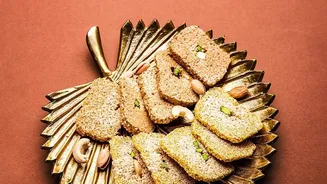
Today, Sandesh continues to evolve, reflecting contemporary tastes and technologies. The traditional wooden 'chhaanch' now competes with modern moulds made of silicone, plastic, and metal, which offer ease of use and new design possibilities. Confectioners are pushing creative boundaries further than ever, crafting 'designer' Sandesh for specific occasions like birthdays and corporate events. These modern sweets might feature abstract shapes, vibrant colours derived from natural ingredients, and fusion flavours that would have been unimaginable a century ago. This blend of tradition and high-tech creativity ensures that Sandesh is not just a relic of the past, but a living, evolving art form.