




A Delicate Maharashtrian Marvel
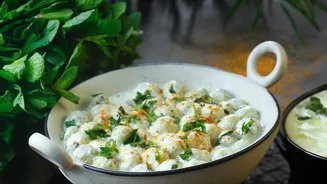
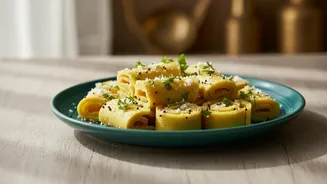
Suralichi Vadi is a beloved savoury snack popular in the Indian states of Maharashtra and Gujarat, where it is more commonly known as Khandvi. The name 'Suralichi Vadi' translates from Marathi to 'rolled fritter', which perfectly describes its appearance.
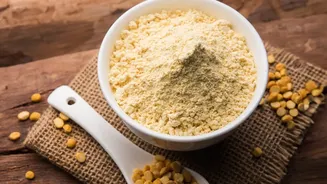
It consists of yellowish, soft, melt-in-your-mouth rolls made primarily from gram flour (besan) and yoghurt or buttermilk. Though it might look complex, the dish is a celebration of simple flavours and textures. It is naturally gluten-free and can be enjoyed hot or at room temperature, making it a versatile treat for any occasion, from a cup of evening tea to a festive party platter.
The Magic of Simple Ingredients
The beauty of Suralichi Vadi lies in its minimalist ingredient list. The primary components are gram flour and a souring agent, which is typically slightly sour yoghurt (dahi) or buttermilk (chaas). This combination is seasoned with basics like turmeric for colour, salt, and often a paste of ginger and green chillies for a subtle kick of flavour. The final flourish comes from a tempering (known as a 'tadka' or 'vaghar') of hot oil infused with mustard seeds, sesame seeds, asafoetida, and sometimes curry leaves, which is drizzled over the finished rolls. A generous garnish of fresh grated coconut and finely chopped coriander leaves adds the final touch of freshness and texture.
The Art of the Perfect Batter
The secret to successful Suralichi Vadi lies almost entirely in the consistency of the batter. For many home cooks, this is the most intimidating step. The key is to achieve a completely smooth, lump-free batter before you even begin cooking. Most recipes follow a specific ratio, often 1 part gram flour to 2 or 2.5 parts liquid (yoghurt/buttermilk and water). It is crucial to whisk the flour and liquids together thoroughly, adding the water gradually, until the mixture has the consistency of a thin, flowing liquid. Some cooks even pass the batter through a sieve to ensure it's perfectly smooth. This initial step prevents lumps from forming during the cooking process, which is essential for a silky-smooth final texture.
Cooking with Patience and Precision
Once the batter is ready, it is cooked in a heavy-bottomed pan over a low to medium flame. This stage requires constant, continuous stirring to prevent the mixture from sticking to the bottom of the pan and forming lumps. As it heats up, the batter will slowly begin to thicken. The process can take anywhere from 10 to 15 minutes. You will know it's getting close when the mixture becomes thick, glossy, and starts to pull away from the sides of the pan. A common way to test for readiness is to spread a tiny amount on a greased plate. After about 30 seconds, if you can peel it off and roll it easily without it breaking or feeling sticky, the batter is perfectly cooked.
Spreading, Rolling, and Tempering
This is where speed becomes important. As soon as the batter is cooked, you must work quickly to spread it into a paper-thin layer onto a smooth, greased surface, like the back of a steel plate or a clean countertop. The batter sets very fast as it cools, so spreading it thinly and evenly requires a swift hand. Once spread, let it cool for a few minutes. Then, using a knife or pizza cutter, cut the sheet into long, vertical strips about two inches wide. Carefully and gently, roll each strip into a tight spiral and arrange them on a serving platter. The final step is to pour the hot, sizzling tempering over the rolls, followed by a garnish of coconut and coriander.
Tips for First-Time Success
Making Suralichi Vadi can be tricky, but don't be discouraged. If your rolls are breaking, it could mean the batter was overcooked or spread too thickly. If the batter is not cooked enough, the rolls will be sticky and won't form properly. Always do the plate test to check for doneness before spreading the whole batch. Ensure you are stirring continuously to avoid lumps. If you find lumps, you can use a whisk to break them down while cooking. And remember to work fast when spreading the batter; if it cools too much, it will be difficult to spread thinly. With a little practice, you'll be creating these impressive savoury rolls with ease.