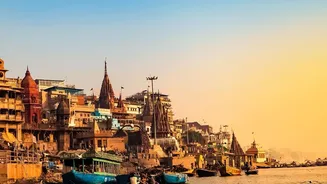






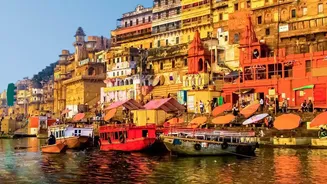
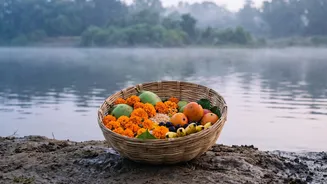

Every year, the banks of rivers across Bihar and beyond transform into a mesmerising spectacle of faith. This is Chhath Puja, a four-day festival of immense devotion. Its spiritual peak is defined by two powerful rituals: the Arghya offerings.
The Heart of Chhath: A Devotion to the Sun
Chhath Puja
is an ancient Vedic festival dedicated to Surya, the Sun God, and his sister, Chhathi Maiya. Primarily celebrated in Bihar, Jharkhand, and eastern Uttar Pradesh, it is a rigorous observance of purity, discipline, and gratitude for the life-giving energy of the sun. The four-day festival, taking place from November 13th to 16th in 2026, involves fasting, including a demanding 36-hour period without water, and culminates in two key offerings, or 'Arghyas', to the sun. The devotee who undertakes the fast, known as a 'vrati', is at the center of all rituals, praying for the well-being, prosperity, and long life of their family, especially their children.
Sandhya Arghya: Saluting the Setting Sun
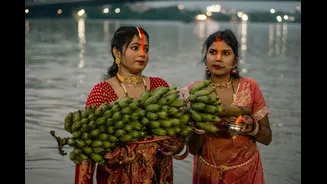
The third day, falling on Sunday, November 15, 2026, is the day of Sandhya Arghya, or the evening offering. This is arguably the most iconic and visually stunning part of Chhath. As dusk approaches, vratis and their families gather at the banks of rivers or ponds. Standing waist-deep in the water, the devotees offer prayers to the setting sun. They hold bamboo baskets and trays, known as 'soops', filled with prasad including fruits, sugarcane, and the traditional sweet, Thekua. This ritual is unique in Hindu tradition, which typically focuses on the rising sun. Worshipping the setting sun symbolises gratitude for the day's light and energy, and an acknowledgment of life's natural cycles of ending and renewal.
Usha Arghya: Welcoming the Dawn
Before dawn on the fourth and final day, Monday, November 16, 2026, the families return to the ghats for Usha Arghya, the morning offering. The vratis, having now fasted for nearly 36 hours, once again stand in the cold water, facing east to greet the first rays of the rising sun. As the sun emerges, the final Arghya is offered, a moment filled with emotion and spiritual release. This ritual represents new beginnings, hope, and the victory of light over darkness. Upon completing the offering, the vrati breaks their long fast, often with a piece of ginger and jaggery, followed by the prasad. This moment concludes the arduous fast and the festival itself.
The Symbolism of the Two Offerings
The worship of both the setting and rising sun is the philosophical core of Chhath Puja. The Sandhya Arghya is an act of thankfulness and reflection, honouring the energy that sustained life throughout the day. It is a moment of surrender, acknowledging that endings are as divine as beginnings. The Usha Arghya, in contrast, is an invocation of hope and renewal, a prayer for continued blessings and prosperity. Together, they represent the complete cycle of life, death, and rebirth, reminding devotees to find grace and divinity in all phases of existence. This balance makes Chhath a profound expression of humanity's connection to the rhythms of nature.