






An Industry Deliberately Unravelled
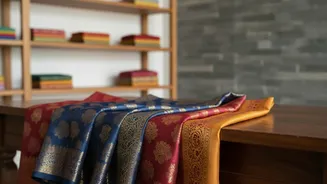
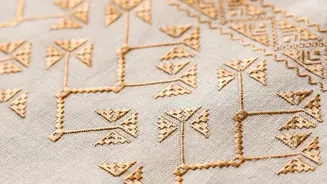
Before British rule, India was a global textile powerhouse, renowned for its exquisite hand-woven fabrics like muslin and calico. These textiles were not just commodities; they were cultural treasures and the backbone of a thriving economy. However, the Industrial
Revolution in Britain created a demand for both raw materials and new markets. Colonial policies were strategically designed to dismantle India's self-sufficient textile industry. Heavy taxes were imposed on Indian weavers, while cheap, machine-made textiles from British mills flooded the market. India was transformed from a leading exporter of finished textiles into a mere supplier of raw cotton for British factories, only to buy back the finished cloth at exorbitant prices. This systematic de-industrialisation crippled local economies and left entire communities of artisans impoverished.
The Swadeshi Solution
The response to this economic subjugation was the Swadeshi movement, which gained momentum in 1905. The word 'Swadeshi' itself means 'of one's own country', and the movement was a call for Indians to boycott foreign goods, especially British textiles, and embrace locally produced items. This was more than just an economic strategy; it was a political act of self-reliance and non-cooperation. Public bonfires of foreign cloth became a common sight, a dramatic rejection of colonial dependence. The movement urged people to turn back to indigenous industries, reviving skills and restoring a sense of national pride. It was in this fertile ground of cultural and economic reawakening that a simple, hand-spun fabric would soon become the icon of the entire freedom struggle.
Gandhi and the Gospel of Khadi
It was Mahatma Gandhi who elevated Khadi—hand-spun and hand-woven cloth—from a humble fabric to a powerful philosophy. Starting his movement for Khadi around 1918, he saw it as the ultimate symbol of Swadeshi. Gandhi encouraged every Indian, regardless of class or creed, to spend time each day spinning yarn on a 'charkha' (spinning wheel). This simple act was a form of discipline, a meditation on self-reliance, and a direct challenge to British industrial might. By spinning and wearing Khadi, Indians were participating directly in the freedom movement, making a personal commitment to economic independence. Gandhi famously called Khadi the 'livery of freedom', a uniform that united millions in a shared purpose and identity.
A Thread of Unity and Empowerment
The Khadi movement became a great social equaliser. When people from all walks of life—from wealthy urbanites to poor villagers—wore the same coarse, simple cloth, it dissolved visual markers of class and caste. This act of solidarity created a powerful bond of unity across a diverse nation. Furthermore, the movement played a crucial role in the empowerment of women. Spinning the charkha provided women with a respectable source of income they could earn from home, offering a degree of financial autonomy. It redefined domestic activities like spinning and weaving as patriotic acts, giving women a tangible and significant role in the nation-building process.
The Fabric of a New Nation
The symbolism of Khadi and the charkha became so potent that the spinning wheel was featured at the center of the first versions of the Indian national flag. When India finally achieved independence on August 15, 1947, the national flag hoisted was, fittingly, made of Khadi. The fabric represented the success of a non-violent revolution, one that was fought not just with protests and marches, but with the quiet hum of the spinning wheel. It was a testament to the idea that true freedom—Swaraj—was not just political, but also economic and spiritual. The loom and the thread had done more than create cloth; they had woven the very fabric of a free and self-reliant nation.