





The Invisible Highways in the Sky
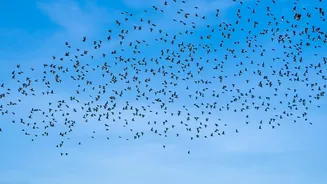
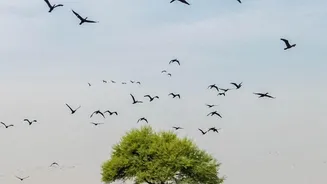
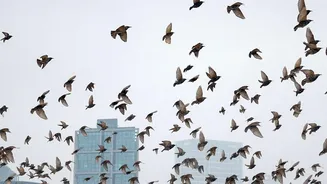
Birds do not recognize the lines humans draw on maps. Their lives are governed by ancient, invisible highways in the sky known as flyways. These are the complete migratory paths birds take annually, stretching from their breeding grounds to their wintering
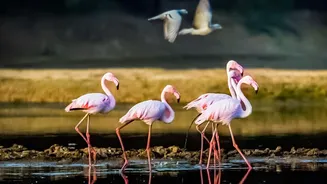
areas and back again. A flyway is not just a route; it is a chain of essential habitats—wetlands, forests, and grasslands—that acts as a network of life-sustaining rest stops. India is a critical hub on one of the world's most significant avian superhighways: the Central Asian Flyway (CAF). This vast corridor spans 30 countries from the Arctic Circle to the Indian Ocean, and is used by at least 182 species of waterbirds, including familiar visitors like bar-headed geese and several endangered species. For these birds, India's wetlands and forests are not just a destination, but a crucial sanctuary for surviving the winter.
A Silent, Unfolding Crisis
The familiar spectacle of migration is under severe threat. A comprehensive global study published in July 2026 revealed a startling statistic: 51% of the world's migratory bird species are in decline. This isn't a problem affecting only rare or obscure birds; many once-common species are experiencing significant losses. The Central Asian Flyway is no exception, with at least 40% of its migratory species showing declining populations, and 48 species now considered globally threatened. This decline is a clear signal that the environments we share are under immense pressure. Birds are often called indicators of environmental health; their disappearance suggests that ecosystems are becoming less able to support life. The causes are numerous and complex, but they all share one common trait: they do not respect national borders.
A Perilous Journey Without Passports
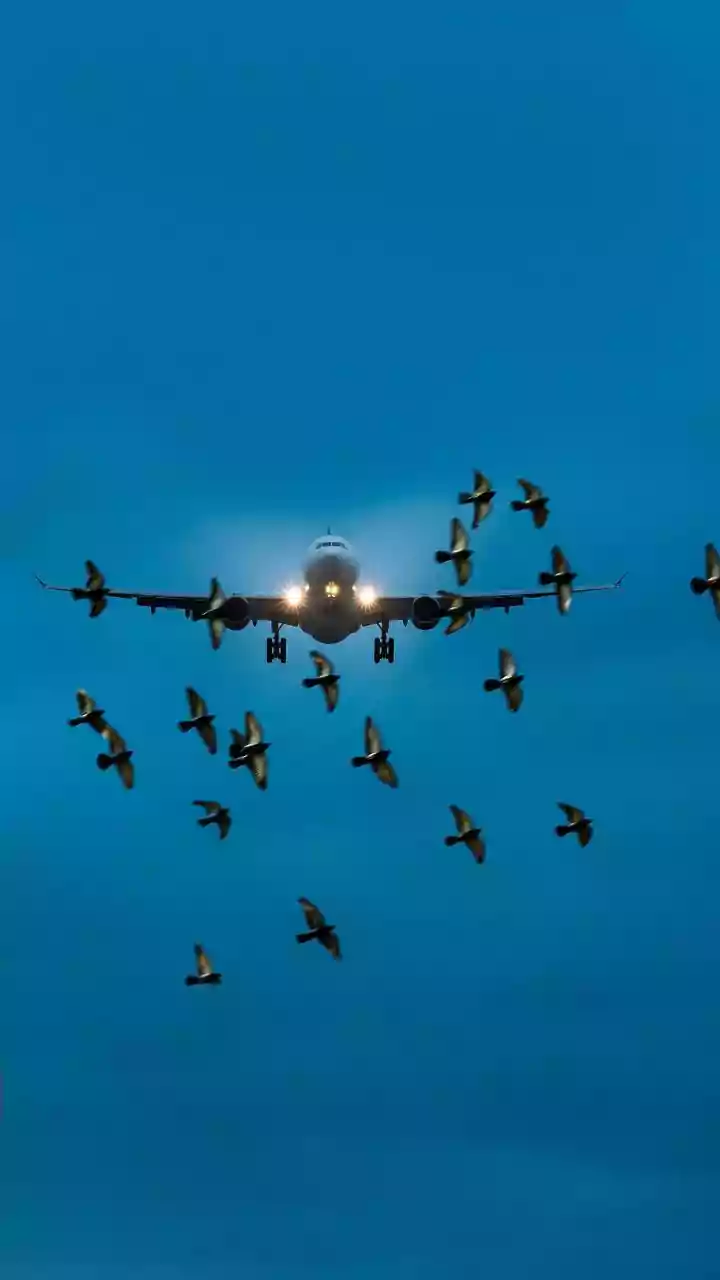
The journey for a migratory bird is a gauntlet of threats that span thousands of kilometres. The most significant threat is habitat loss and degradation. A wetland drained for agriculture in one country, a forest cleared for urban expansion in another, or a coastal mudflat converted for industry in a third can break a vital link in the migratory chain. Climate change adds another layer of danger, altering weather patterns and changing the timing of food availability, meaning birds may arrive at a stopover site to find their food source has already gone. Furthermore, pollution from pesticides and plastics, collisions with power lines and wind turbines, and illegal hunting all take a heavy toll along the route. A bird that is carefully protected in its wintering grounds in India can be lost to any one of these dangers in another country on its long journey home.
Why National Efforts Aren't Enough
This transboundary nature of the threats is precisely why conservation efforts confined within national borders are doomed to fall short. Protecting a wetland in Nepal or a sanctuary in India is absolutely essential, but it is only one piece of a much larger puzzle. As conservationists often say, a flyway is a chain, and it is only as strong as its weakest link. If a bird successfully breeds in Siberia and winters in India, but loses its critical refuelling stopover habitat in between, the entire journey fails. This is the core challenge of migratory species conservation: it requires a fundamentally different way of thinking that looks beyond national jurisdictions and focuses on the entire, interconnected lifecycle of a species.
Conservation That Knows No Borders
The solution must be as borderless as the birds themselves. This means strengthening international cooperation through treaties like the Convention on the Conservation of Migratory Species of Wild Animals (CMS). India has been a party to this convention since 1983 and has taken a leading role in pushing for conservation along the Central Asian Flyway. These agreements provide a framework for countries to share data, coordinate habitat protection, and work together to tackle threats like illegal hunting and infrastructure risks. It involves Range States—all the countries a bird passes through—accepting a shared responsibility. Protecting these global travellers requires a coordinated effort to ensure that safe passage, healthy habitats, and a secure future are waiting for them not just at their destination, but at every step of their incredible journey.