







The Modern Skygazer's Toolkit
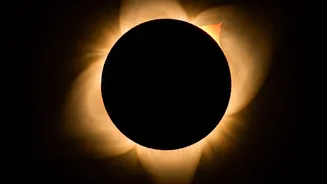
For a growing number of Indians, a solar eclipse is a magnificent celestial event, a spectacle to be witnessed and photographed. Astronomy clubs buzz with activity, and social media feeds fill with tips on how to best view the phenomenon. The primary
concern is safety. It is incredibly dangerous to look directly at the sun, and doing so during an eclipse can cause permanent eye damage, or 'retinal burns'. The solution lies in specialised solar viewing glasses, which are thousands of times darker than regular sunglasses and filter out harmful ultraviolet and infrared rays. In recent years, e-commerce platforms have made it easier than ever to acquire these ISO 12312-2 certified spectacles, turning a rare astronomical event into a shared, accessible experience. Families gather on rooftops and in open grounds, transforming the astronomical alignment into a community science lesson.
The Ancient Wisdom of Sutak
In stark contrast, many Indian households observe the eclipse with quiet reverence and caution, governed by the rules of Sutak. According to Vedic tradition, Sutak is an inauspicious period that begins hours before an eclipse—12 hours for a solar eclipse and 9 for a lunar one. This tradition is rooted in the mythological story of the demon Svarbhanu, whose head (Rahu) and body (Ketu) are believed to swallow the sun and moon out of vengeance, causing the eclipse. This celestial struggle is thought to release negative energies, contaminating the atmosphere. To protect oneself, a set of rules is followed: fasting is observed, cooking and eating are forbidden, and people are advised to stay indoors. Pregnant women, in particular, are counselled to avoid any exposure to the eclipse to protect the unborn child. Temples close their doors, and spiritual activities like chanting mantras are encouraged to generate positive vibrations.
A Tale of Two Households
Imagine two homes on the same street as the eclipse begins. In one, the family is outdoors, their faces tilted towards the sky, protected by dark-lensed paper glasses. The children marvel as the moon takes a 'bite' out of the sun. In the house next door, the curtains are drawn shut. The family sits together, perhaps chanting or meditating. No food is being prepared, and any cooked meals from before the Sutak period began have been protected with Tulsi leaves or will be discarded. After the eclipse concludes, they will perform a cleansing ritual, which includes bathing and sprinkling holy water throughout the house before preparing a fresh meal. This dichotomy is not a caricature; it is the lived reality in a nation where scientific curiosity and deep-seated faith coexist, often within the same family.
Bridging Generations and Beliefs
The real story lies in the space between these two extremes. Many modern Indians find themselves navigating a delicate balance. A young professional might buy eclipse glasses for themselves but will ensure their parents have everything they need to observe Sutak rituals comfortably. They might step out for a few minutes to witness the peak of the eclipse but will refrain from eating until their elders have broken their fast. This negotiation reflects a broader trend in Indian society—a unique blend of respecting tradition while embracing modernity. It’s less about a clash and more about a quiet, ongoing dialogue between generations and their worldviews. The eclipse, in this context, becomes a catalyst for conversations about faith, science, and personal choice.