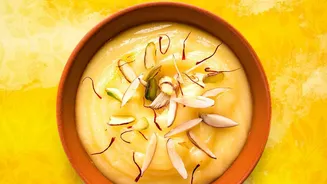





Thick, velvety, and perfumed with saffron and cardamom, shrikhand is one of India's most beloved desserts. This guide will walk you through transforming simple curd into a luxurious treat that is elegant, indulgent, and surprisingly easy to make at home.
The Foundation: Perfect Thickened Curd
The secret to exceptional shrikhand lies entirely in the quality of its base: the thickened curd, also known as 'chakka' in Marathi. This is yogurt that has been strained of all its whey, resulting in a consistency somewhere between cream cheese and whipped cream. Using thin or watery curd will result in a loose shrikhand that fails to set properly. To make your own chakka, start with good quality, full-fat yogurt. Place a clean muslin cloth or cheesecloth over a deep strainer set over a bowl. Pour the yogurt into the cloth, bring the edges together, and tie it securely. You can then hang this bundle over the bowl or place a weight on top to press the liquid out. Let it drain in the refrigerator for at least 8 to 12 hours, or even overnight, until the curd is thick and significantly reduced in volume. Typically, four cups of regular curd will yield about two cups of chakka.
Achieving a Silky, Smooth Texture
Once your chakka is ready, the goal is to make it perfectly smooth and lump-free. Transfer the thickened curd to a mixing bowl. Using a sturdy whisk or a spatula, begin to beat the chakka until it becomes light and creamy. For an exceptionally smooth finish, many traditional recipes recommend passing the chakka through a fine-mesh sieve. This step breaks down any remaining lumps and ensures a velvety texture in the final dessert. While it takes a little extra effort, it is a hallmark of high-quality, homemade shrikhand. Some prefer to use an electric beater on a low setting for a few minutes, but be careful not to over-whisk, as this can sometimes make the mixture runny.
The Art of Sweetness and Spice
With a smooth base, it's time to introduce the classic flavours. Sugar is essential, but the type you use matters. It is highly recommended to use powdered sugar, not granulated, as it dissolves quickly and easily into the cold chakka without leaving a gritty texture. If you only have granulated sugar, you can grind it into a fine powder using a mixer. Add the powdered sugar to the chakka and whisk until it is fully incorporated. The signature aroma of classic shrikhand comes from saffron (kesar) and cardamom (elaichi). To get the most from your saffron, 'bloom' it first. Soak a generous pinch of saffron strands in a tablespoon of warm milk for about 10-15 minutes. This process releases its vibrant colour and deep flavour. Add this saffron-infused milk and some freshly ground cardamom powder to the yogurt mixture, and whisk until the shrikhand is a uniform, beautiful pale yellow.
Serving and Flavour Variations
Once prepared, the shrikhand should be chilled for at least two to four hours before serving. This allows the flavours to meld together and the texture to set beautifully. When ready to serve, garnish generously with slivered pistachios and almonds for a delightful crunch. While Kesar Elaichi Shrikhand is a timeless classic, the dessert is wonderfully versatile. In the summer, you can fold in smooth mango pulp to create the popular variation known as Amrakhand. Other options include adding rose syrup, or even finely chopped strawberries for a fruity twist. Shrikhand is delicious on its own as a dessert but is famously served with hot, fluffy puris for a classic sweet and savoury combination.