







Not Quite a Star, Not Quite a Planet
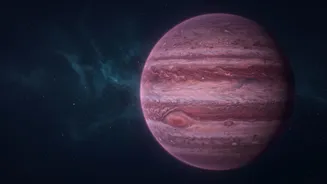
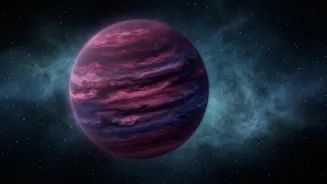
First discovered in the 1990s, brown dwarfs are one of the galaxy's most intriguing puzzles. They form from the same collapsing clouds of gas and dust that create stars, but they never accumulate enough mass to ignite hydrogen fusion in their cores—the
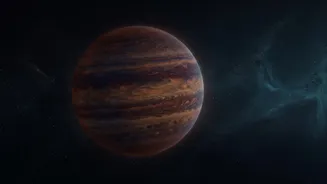
engine that makes stars shine. Because of this, they're often called 'failed stars'. After their initial formation, they simply cool and fade over billions of years. Yet, they also share many characteristics with gas giants like Jupiter, including complex, cloudy atmospheres. Unlike planets in our solar system, however, most brown dwarfs drift through space alone, heated only by their own internal warmth left over from their formation. This unique status makes them perfect laboratories for studying atmospheric physics in ways that are impossible with exoplanets, which are often lost in the blinding glare of their parent stars.
A New Eye on the Cosmos
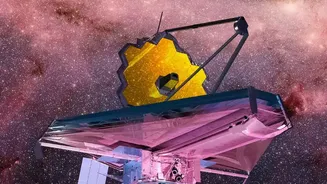
Enter SPHEREx, which stands for Spectro-Photometer for the History of the Universe, Epoch of Reionization, and Ices Explorer. Launched in 2025, this NASA space telescope is on a two-year mission to map the entire sky in near-infrared light—a part of the spectrum invisible to the human eye but crucial for peering into the secrets of the cosmos. While its primary goals include studying the rapid expansion of the early universe and searching for the ingredients for life, like water ice in stellar nurseries, SPHEREx has proven to be an exceptional brown dwarf hunter. It scans the entire sky multiple times, creating a comprehensive map in 102 different infrared 'colors'. This far exceeds the color resolution of previous all-sky maps, giving scientists an incredibly detailed look at the chemical makeup of celestial objects.
An Atmospheric Weather Report
By using a technique called spectroscopy, SPHEREx breaks down the light from these dim objects into a spectrum, revealing the chemical 'fingerprints' of the molecules in their atmospheres. Recent findings have shown that brown dwarf atmospheres are chemically rich, with clear signatures of water, methane, carbon monoxide, and carbon dioxide. Before SPHEREx, only a few dozen brown dwarfs had been studied in detail. Now, the telescope is in the process of analyzing thousands, providing a massive dataset that reveals how their atmospheric chemistry changes across a wide range of temperatures. The observations show how the balance of these molecules shifts from one object to the next, likely depending on the brown dwarf's temperature and age. Colder brown dwarfs, for instance, show more methane, while hotter ones are dominated by carbon monoxide, giving a glimpse into their atmospheric evolution as they cool over cosmic time.
From Failed Stars to Cosmic Clues
Studying the atmospheres of these 'in-between' objects offers profound insights that extend far beyond the brown dwarfs themselves. Their atmospheres serve as proxies for the giant exoplanets found orbiting other stars, which are much harder to study directly. Understanding the cloud layers, weather patterns, and chemical processes on a lonely brown dwarf can help scientists better model and interpret observations of gas giants in distant solar systems. The detailed chemical inventory provided by SPHEREx helps refine theories of planet and star formation, showing what raw materials are available and how they behave under different conditions. By mapping the atmospheric diversity across thousands of these objects, scientists can build a more complete picture of how planetary systems evolve and the range of atmospheric conditions that can exist throughout the galaxy.