







Why Your Compost Pile Hates the Rain
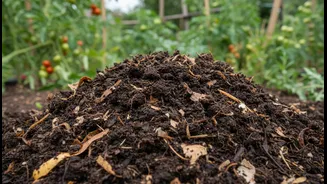
A healthy compost pile is a bustling city of microscopic workers—aerobic bacteria—that need oxygen to thrive. They break down your kitchen scraps and garden waste, generating heat and creating rich, earthy humus. When heavy rains arrive, your compost pile can
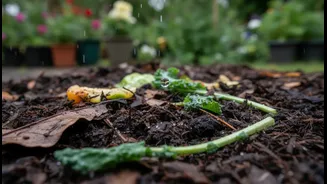
quickly become waterlogged. This excess water fills all the tiny air pockets that the bacteria rely on. Without oxygen, the beneficial aerobic microbes die off and are replaced by their anaerobic cousins. These new microbes don't need air, but their decomposition process is slow, smelly, and inefficient. They produce byproducts like ammonia and hydrogen sulfide, which are responsible for the foul, rotten-egg smell that signals a compost pile in distress. The texture also changes, turning from crumbly to a dense, slimy sludge that is difficult to manage and low in nutrients.
The Magic of 'Browns' for Structure
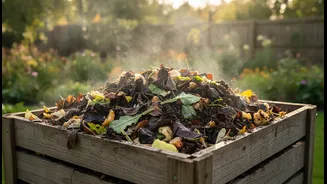
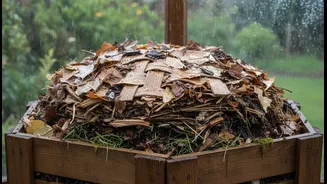
The solution lies in creating a better internal structure, and the heroes of this story are 'browns'. In composting lingo, 'greens' are nitrogen-rich materials like fresh grass clippings, coffee grounds, and kitchen scraps. 'Browns' are carbon-rich materials, and they are your best defense against a soggy pile. These materials, such as dried leaves, shredded cardboard, and wood chips, do two critical jobs during the rainy season. First, they act like a sponge, soaking up excess moisture from the wet 'greens'. Second, and more importantly, their coarse, bulky nature creates and maintains the air pockets essential for aerobic bacteria to breathe. This structure prevents the pile from compacting under the weight of the water, ensuring good drainage and aeration even during a downpour.
Building a Monsoon-Proof Layer Cake
To master rainy-season composting, you need to think like you're building a layered cake. The ideal carbon-to-nitrogen ratio for a fast, healthy compost pile is about 25 to 30 parts carbon for every one part nitrogen (25:1 or 30:1). While you don't need to measure this precisely, a good rule of thumb is to use two to three times more brown material than green material by volume. During the monsoon, you should increase this ratio even further. Start your pile with a thick base of coarse browns like twigs or wood chips to promote drainage from the bottom. Then, add a layer of your green kitchen scraps. Immediately cover this with a much thicker layer of browns. For every bucket of food waste, aim to add at least two or three buckets of shredded cardboard, dry leaves, or cocopeat. This ensures every wet, nitrogen-rich layer is separated by a dry, carbon-rich layer that can absorb moisture and maintain airflow. Covering the top of your pile with a final thick layer of browns or a breathable tarp can also help shed direct rainfall without trapping moisture.
Your Best Structural Materials
Not all browns are created equal when it comes to providing structure. While paper and newspaper can work, they tend to get pulpy and mat down when wet, which can worsen compaction. For the rainy season, focus on materials that hold their shape. Shredded Cardboard: Corrugated cardboard is excellent. The air channels within the corrugation add to the aeration, and it breaks down steadily. Just be sure to remove any plastic tape. Dry Leaves: A classic for a reason. They are absorbent and provide good bulk. It's a great idea to stockpile them in bags before the monsoon begins. Cocopeat (Coir): This is a fantastic absorbent. A handful of cocopeat can soak up a surprising amount of water, and it keeps the pile light and airy. Wood Chips or Sawdust: These materials are very high in carbon and decompose slowly, making them perfect for creating long-lasting air channels and a solid structural base. Pine needles also work well due to their fibrous texture and slow decomposition rate.
Troubleshooting a Soggy Pile
If your compost is already wet and smelly, don't despair. The fix is immediate and hands-on. First, stop adding any more green materials. Next, use a pitchfork to turn the pile, breaking up any compacted clumps and introducing as much air as possible. As you turn it, generously mix in large amounts of dry, structural brown materials like shredded cardboard or wood chips. This will simultaneously absorb the excess water and recreate the air pockets the pile desperately needs. If the pile is severely waterlogged, you may need to spread it out on a tarp in a sheltered area to dry for a day before rebuilding it with the proper brown-to-green ratio. Regular turning every few days during periods of heavy rain will also help prevent water from stagnating and keep the core of the pile active.