






Your Accessible Gateway to Strength
Wall push-ups are a modified version of the classic push-up, using a wall for support instead of the floor. This simple adjustment significantly reduces the amount of body weight you have to lift, making it an ideal entry point for those new to fitness
or anyone who finds floor push-ups too challenging. The benefits are numerous: it's a low-impact exercise that is gentle on the joints, particularly the wrists and shoulders, which can be a common area of discomfort in traditional push-ups. By starting against a wall, you can focus on mastering the movement pattern correctly and safely, building a solid foundation of strength before moving on to more difficult variations.
Mastering the Perfect Form
Proper technique is crucial for getting the most out of the exercise and preventing injury. Stand facing a sturdy wall, about an arm's length away, with your feet shoulder-width apart. Place your palms flat on the wall at about chest or shoulder height, positioned slightly wider than your shoulders with your fingers pointing toward the ceiling. Engage your core muscles to keep your body in a straight line from your head to your heels—think of it as a standing plank. Slowly bend your elbows, keeping them at a 45-degree angle to your body rather than flaring them out to the sides, and lower your chest toward the wall until your nose almost touches it. Exhale and push back to the starting position with controlled movement.
Common Mistakes to Avoid
To ensure your wall push-ups are effective, watch out for a few common errors. Many people let their hips sag toward the wall or pike them backward, breaking the straight body line. Keep your core and glutes engaged to maintain a solid plank-like posture throughout the movement. Another frequent mistake is incorrect hand placement; placing them too high or too wide can strain your shoulders. Also, avoid dropping your head or leading with your neck. Your head should always stay in line with your spine. Finally, control the movement. Rushing through repetitions is less effective than performing them slowly and deliberately.
Building Your At-Home Routine
As a beginner, a great starting point is to aim for 2 to 3 sets of 10 to 15 repetitions. Focus on quality over quantity. If you can't complete the set with good form, reduce the number of reps and build up gradually. You can incorporate wall push-ups into your routine 2 to 3 times per week on non-consecutive days to allow your muscles time to recover and grow. The beauty of this exercise is its convenience; you can do it anytime, anywhere, whether you're waiting for your coffee to brew or taking a quick break from your desk. Wall push-ups target the chest, shoulders, and triceps, while also engaging your core for stability, making it an efficient upper-body workout.
Ready for the Next Challenge?
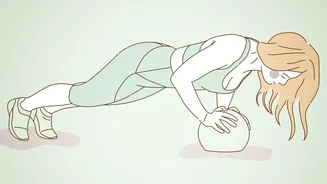
Once you can comfortably perform several sets of wall push-ups with perfect form, you're ready to progress. To increase the difficulty, simply step your feet further back from the wall. This increases the angle and forces you to lift more of your body weight. When that becomes easy, you can move on to incline push-ups by placing your hands on a lower, stable surface like a kitchen counter, a sturdy table, or a bench. As you get stronger, you can gradually decrease the height of the incline, eventually working your way down to performing push-ups on your knees, and finally, the classic floor push-up.