


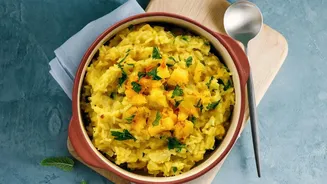
India’s Ultimate Comfort Meal
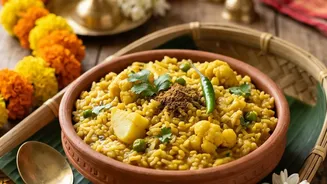
Khichdi, a humble and wholesome preparation of rice and lentils, holds a cherished place in Indian households. It is celebrated not just for its simplicity but for its restorative properties. Often the first food offered to babies or to those recovering
from an illness, khichdi is the epitome of a meal that soothes and nourishes. Its soft texture and minimal spice make it easy to break down, providing the body with energy without straining the digestive tract. Ayurvedic tradition has long regarded khichdi as a food that balances the body and supports the 'agni', or digestive fire, making it a perfect meal for a gut reset. While traditionally made with moong dal, using masoor dal (red lentils) offers a delightful and equally beneficial alternative.
The Power of Masoor and Spinach
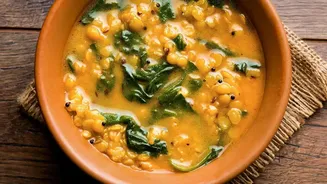
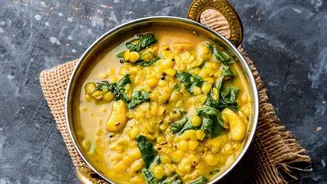
This particular khichdi variation brings together two nutritional powerhouses: masoor dal and spinach. Masoor dal is prized for being a quick-cooking lentil that is rich in plant-based protein and dietary fibre. This fibre is crucial for digestive health, as it helps regulate bowel movements and prevent constipation. Being low on the glycemic index, it also provides sustained energy without causing sharp spikes in blood sugar. Spinach, meanwhile, adds a wealth of vitamins and minerals for very few calories. It is an excellent source of insoluble fibre, which fuels a healthy gut microbiome and promotes regularity. Packed with Vitamin K, iron, and antioxidants like lutein, spinach supports everything from bone health to eye health, making this khichdi a truly nutrient-dense dish.
A Symphony of Gentle Spices
The magic of a good khichdi also lies in its tempering, or 'tadka'. Even in a light version, a few key spices can elevate the flavour and add significant health benefits. Turmeric (haldi), the golden spice of Indian cooking, is renowned for its anti-inflammatory properties thanks to its active compound, curcumin. Cumin seeds (jeera) are not just there for their earthy aroma; they are known to have carminative properties that can help reduce gas and bloating. A pinch of asafoetida (hing) is another traditional addition specifically for aiding digestion. Valued in Ayurveda, hing is known to relieve flatulence and indigestion, making it a small but mighty component of this digestive-friendly meal.
Easy Masoor Dal and Spinach Khichdi Recipe
This one-pot recipe is simple, quick, and perfect for a weeknight meal. Ingredients: - 1/2 cup Masoor Dal (red lentils), washed and drained - 1/2 cup Rice (any short-grain variety works well), washed and drained - 1 cup chopped fresh Spinach (palak) - 1 tablespoon Ghee or oil - 1 teaspoon Cumin seeds (jeera) - 1/4 teaspoon Asafoetida (hing) - 1/2 teaspoon Turmeric powder (haldi) - 1 teaspoon grated Ginger - Salt to taste - 4 cups Water Method: 1. Heat the ghee or oil in a pressure cooker over medium heat. Add the cumin seeds and allow them to crackle. Add the asafoetida, grated ginger, and turmeric powder, and sauté for 30 seconds. 2. Add the washed and drained rice and masoor dal to the cooker. Stir for a minute to toast them slightly. 3. Pour in the 4 cups of water and add salt to taste. Mix everything well. 4. Secure the lid of the pressure cooker and cook for 3-4 whistles, or about 15 minutes. Let the pressure release naturally. 5. Once the pressure has subsided, open the cooker. The khichdi should be soft and porridge-like. Stir in the chopped spinach. The residual heat will wilt it perfectly. 6. Let it sit for a couple of minutes before serving. You can adjust the consistency by adding a little hot water if you prefer it thinner.
Serving and Customisation Tips
This Masoor Dal and Spinach Khichdi is delicious on its own, but it truly shines when served with a few classic accompaniments. A dollop of plain yoghurt or a side of raita provides a cooling contrast and adds probiotics for further gut support. A simple salad of chopped cucumber and tomatoes can add a fresh crunch. For a little more indulgence, a small spoonful of ghee drizzled over the hot khichdi before serving enhances its flavour and adds healthy fats. Feel free to add other easy-to-digest vegetables like carrots or peas along with the rice and dal for extra nutrition. The key is to keep it simple, allowing the comforting nature of the dish to take centre stage.