




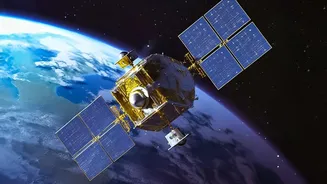

What Makes a Satellite 'Smart'?
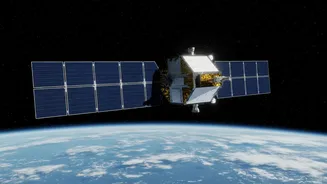
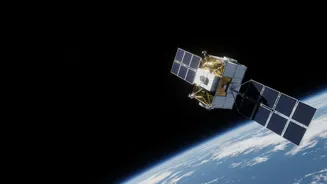
For decades, most satellites have operated on a 'bent pipe' model: collect raw data, and beam it all back to Earth for humans to sort through. A smart satellite flips this script. By integrating powerful onboard processors and artificial intelligence
(AI), these machines can perform 'edge computing'—analyzing data right where it's collected, in orbit. Instead of sending down terabytes of cloudy images, an AI-equipped satellite can identify and transmit only the clear, relevant pictures of a specific area of interest, like a wildfire or evidence of illegal fishing. This ability to think for themselves, filter information, and even learn from new data is what makes them 'smart'. It transforms them from passive collectors into autonomous observatories capable of making real-time decisions without ground intervention.
Why the Sudden Urgency?
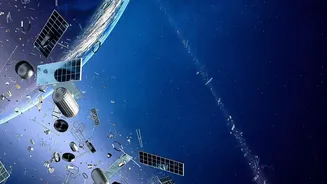
The push for smarter satellites is driven by two main factors: too much traffic and too much data. Low Earth orbit (LEO) is becoming incredibly crowded, largely due to mega-constellations from companies like SpaceX. This drastically increases the risk of collisions with other satellites or the ever-growing cloud of space debris. The current system of tracking potential crashes and manually plotting avoidance maneuvers is becoming unsustainable as the number of satellites climbs into the tens of thousands. At the same time, modern Earth-observation satellites generate more high-resolution data than can be efficiently sent back to Earth. The sheer volume creates a downlink bottleneck, delaying access to potentially critical information. Smart satellites solve both problems by enabling automated collision avoidance and by processing data in orbit to send back only actionable insights, saving precious time and bandwidth.
The Challenge of Automated Collision Avoidance
The most pressing routine decision being handed over to AI is collision avoidance. Manually, this is a tense process involving days of tracking and coordination. Automating it seems like a logical solution, and several agencies and companies are developing systems to do just that. The European Space Agency (ESA), for instance, is developing a system that uses machine learning to assess risks and potentially issue maneuvering orders automatically. However, this raises thorny practical and legal questions. If an autonomous satellite makes the wrong move and causes a collision, who is liable? The operator, the software developer, or the manufacturer? Ensuring these automated systems are reliable and secure from cyber threats is a massive undertaking, as a single error could create even more dangerous debris, threatening the entire orbital environment.
Beyond Dodging Debris: New Frontiers
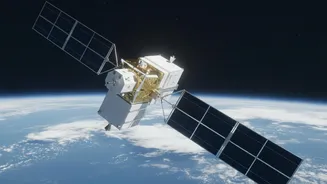
The capabilities of smart satellites extend far beyond just safety maneuvers. In disaster management, an AI-powered satellite can analyze imagery, detect a developing flood or wildfire, and transmit an alert directly to first responders in minutes, rather than the hours or days it might take with traditional methods. In agriculture, they can monitor crop health and predict yields. For national security, they can identify and track threats, providing real-time intelligence without human intervention. Some companies are even planning to put entire data centers in orbit, using the cold of space for cooling and offering powerful computing services to other satellites. This represents a fundamental shift from space being a place for data collection to a domain for active data processing and service delivery.
The Lingering Ethical and Practical Questions
As satellites become more autonomous, the role of the human operator changes, but it doesn't disappear. The key challenges are now less technical and more ethical and logistical. How much autonomy is too much? Assigning accountability when an AI system makes a harmful decision is a major hurdle. For military applications, the ability for a satellite to autonomously identify and track a target raises profound ethical questions about lethal autonomous systems, even if a human makes the final call. Furthermore, as with any connected device, these smart satellites present new vulnerabilities. Securing an AI's decision-making process from being hacked is paramount. Establishing international laws and norms for how these autonomous systems should behave in the shared resource of space is a critical, and so far unresolved, task.