





The New Measurement
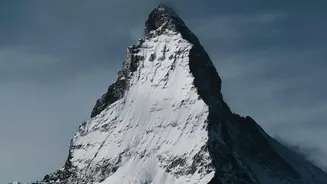
On October 14, 2026, a team of French surveyors announced the latest official height of Mont Blanc: 4,807.47 metres. This marks a surprising increase of nearly two metres from the last public measurement in 2023, which was one of the lowest in recent
memory. These measurements are part of a project that has been running since 2001, with experts taking to the summit every two or three years to track its evolution. This latest reading reverses a recent downward trend, but the story is more complex than a simple gain in height.
A Summit of Snow, Not Stone
It’s crucial to understand what is actually being measured. The rock summit of Mont Blanc stands at a stable 4,792 metres. The variation comes from the thick cap of ice and snow that sits on top, which can change in thickness by several metres. This 'soft' summit is in constant motion, shaped by the year's weather. The amount of winter snowfall determines how much mass is added, while summer heat dictates how much melts. High winds also play a major role, scouring snow off the peak and redistributing it. So, a change in height is less about the mountain itself growing or shrinking and more about the behaviour of its icy crown.
Clues in the Climate
So what does the recent gain in height tell us? Surveyors suggest that specific weather patterns, such as precipitation levels and wind force, are the primary drivers of these short-term fluctuations. The increase to 4,807.47 metres could be linked to heavier-than-usual snowfall during the preceding winter or less intense summer melt. However, experts are quick to caution against drawing broad conclusions about climate change from a single measurement. Jean des Garets, a chief surveyor involved in the project, emphasizes that while the summit is in constant motion, the value of the data comes from long-term analysis, not isolated results.
The Bigger Picture
While the summit's height fluctuates, the broader trend for the Alps is one of significant warming and ice loss. Temperatures in the Alps have risen at roughly double the global average, leading to dramatic glacier retreat. Swiss glaciologists have reported an 'explosion of melt rates' in recent years. Scientists distinguish between the fluctuating height of Mont Blanc's snowcap and the overall volume of ice in the massif. An increase in summit height doesn't contradict the well-documented retreat of Alpine glaciers at lower altitudes, which is a clear and alarming sign of a warming climate.