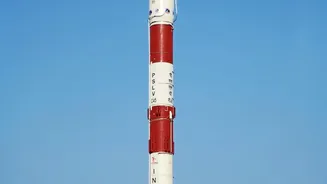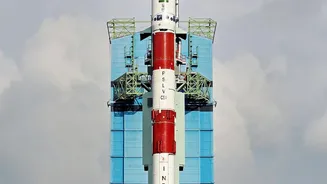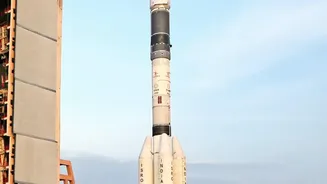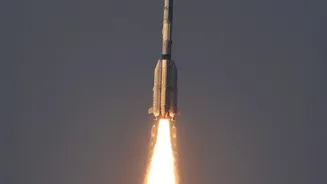







A Strategic Handover of Critical Assets
The core of this initiative involves handing over the operation and management of critical space infrastructure to private enterprise. Recent announcements confirm that the space regulator, IN-SPACe, has invited expressions of interest for a private entity
to manage the brand-new Small Satellite Launch Complex (SLC) at Kulasekarapattinam in Tamil Nadu. This state-of-the-art facility, built at a cost of nearly ₹986 crore, is designed specifically for launching small satellites, a booming segment of the global space economy. This isn't just about leasing out land; the selected operator will be responsible for end-to-end management, from launch campaigns and facility maintenance to mission readiness and safety.
More Than Just Blueprints
The headline-making part of this transition is ISRO's commitment to providing comprehensive support. The phrase “training and technical guidance” is a significant promise. For a defined period—up to one year or the completion of three launches—ISRO will provide hands-on assistance to the chosen company. This is a crucial de-risking strategy, ensuring a smooth transition of complex operations. It involves transferring decades of institutional knowledge in launch protocols, safety procedures, and mission management directly to the private sector. This active mentorship is designed to build capability, not just transfer assets, ensuring the private operator can function independently and effectively in the long run.
ISRO's Pivot to the Final Frontier
This move is not a retreat for ISRO but a strategic realignment. By entrusting routine and commercial launch activities to the private sector, ISRO is freeing up its own valuable resources. The agency can now intensify its focus on its core mandate: research and development, deep-space exploration, and strategic missions of national importance. This includes ambitious projects like the Gaganyaan human spaceflight program, a planned Indian space station by 2035, and a crewed lunar mission by 2040. This model mirrors a global trend where national space agencies, like NASA, partner with commercial entities for routine orbital operations, allowing the agency to concentrate on pushing the boundaries of scientific discovery.
Fueling a Commercial Space Race
The privatization of the SSLV and its launch complex is a cornerstone of India's ambition to capture a larger share of the global space market. The small satellite launch market is expanding rapidly, and having a dedicated, efficiently-run private launchpad is a game-changer. The Kulasekarapattinam site offers a key geographical advantage: its southerly location allows rockets to fly directly into polar orbits without the fuel-intensive 'dog-leg maneuver' required from Sriharikota to avoid flying over Sri Lanka. This increased efficiency means heavier payloads and lower costs, making Indian launches more competitive globally. This initiative is expected to energize a growing ecosystem of over 400 space-tech startups in India, fostering innovation and creating high-skilled jobs.