









Meet Agnibaan and Agnikul
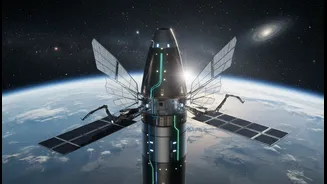
Incubated at IIT Madras, Agnikul Cosmos is one of the brightest stars in India's commercial space scene. Its signature creation is the Agnibaan, a customisable small-lift launch vehicle designed to carry satellites weighing up to 100 kg into a 700 km
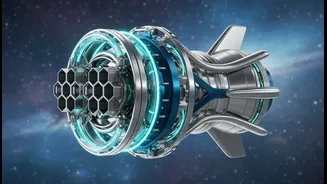
orbit. What truly sets it apart is its engine. The Agnilet is the world's first single-piece, 3D-printed, semi-cryogenic engine, a marvel of modern manufacturing that drastically reduces complexity and production time. The company successfully tested its technology with the Agnibaan SOrTeD (SubOrbital Technological Demonstrator) mission on May 30, 2024, which was India's first flight powered by a semi-cryogenic engine and launched from a private launchpad. This successful test flight provided crucial data, paving the way for more ambitious goals.
The Game-Changer: Reusability
For decades, rockets were like expensive, single-use containers, with multimillion-dollar components being discarded after every launch. The first stage of a rocket, which contains the main engines and provides the initial thrust to overcome Earth's gravity, is the most powerful and expensive part. The idea of retrieving and reusing this stage was long considered the holy grail of rocketry. Global companies like SpaceX proved that landing and reusing first-stage boosters is not only possible but also economically transformative. By recovering these stages, the cost of accessing space plummets, potentially by up to 80%, making launches more frequent and affordable. This is the feat Agnikul is now targeting with its upcoming 'Mission 02'.
Agnibaan's Ambitious Mission 02
Agni kul has announced that its next orbital mission will be India's first private attempt at recovering a rocket booster. The plan for the two-stage Agnibaan involves the first-stage booster performing a controlled descent after it separates from the upper stage. It will then attempt an ocean recovery, a complex manoeuvre that requires incredible precision in guidance, navigation, and control. This mission is not just a copy of what others have done; Agnikul is adding its own innovations. The upper stage of the rocket is also designed to be a 'convertible platform,' meaning instead of becoming space debris after releasing its satellite, it can remain in orbit as a functional asset for further experiments. The company holds patents for this unique architecture in India, the US, and Europe.
Why This Matters for India
Achieving rocket reusability would be a monumental step for India's private space industry. It represents the key technological barrier that separates new launch providers from the world's leaders. Success would position Agnikul, and by extension India, as a highly competitive player in the trillion-dollar global space economy. Cheaper, more frequent launches would empower a new generation of satellite companies, researchers, and innovators. To underscore the mission's national significance, former ISRO Chairman S. Somanath has joined Agnikul's board as an observer, lending his vast experience to the pioneering effort. This attempt by a private startup to achieve what was once the sole domain of national space agencies highlights the rapid maturation of India's space ecosystem, which is now seeing private firms race to achieve milestones ahead of even the national agency.