




A Four-Decade Journey
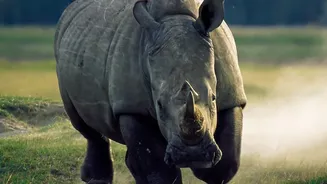
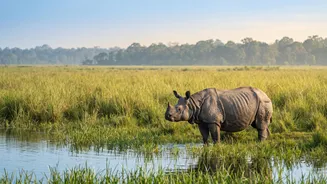
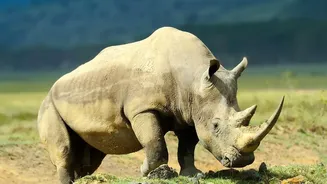
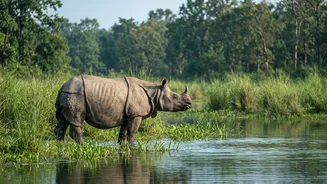
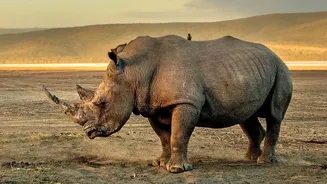
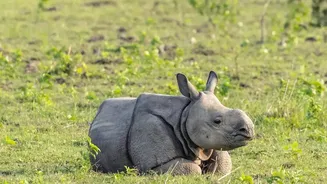
The story of rhinos in Dudhwa is one of revival. Once widespread across the Gangetic plains, the species was wiped out from this part of Uttar Pradesh by the early 20th century due to habitat loss and hunting. The ambitious Rhino Reintroduction Project
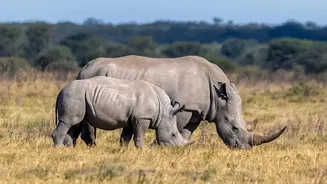
was launched in 1984 to bring them back. In an unprecedented effort, five rhinos were translocated from Assam's Pobitora Wildlife Sanctuary, followed by four more females from Nepal in 1985. This founding group of rhinos was initially kept in a large, fenced enclosure called a Rhino Rehabilitation Area (RRA) to help them acclimatise and establish a breeding population in a protected environment. For nearly 40 years, this cautious approach paid off as the numbers slowly but steadily grew within these enclosures.
The Significance of 53
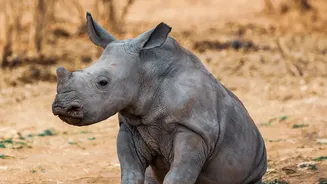
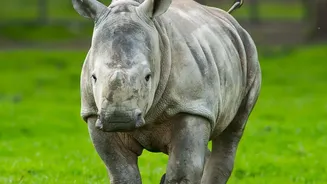
Reaching a population of 53, as confirmed by the 2026 census, is more than just a number—it’s a critical milestone. This figure, comprising 17 males, 25 females, and 11 sub-adults, signals that the population is becoming robust enough to be considered a viable, self-sustaining group. This success is the culmination of two phases of the reintroduction project. It demonstrates that with dedicated management, including habitat protection and anti-poaching measures, a species can be brought back from local extinction. The growth has been hard-won, with the reserve overcoming challenges like territorial fights among males and natural predation. The achievement validates the long-term strategy of the Uttar Pradesh Forest Department and its partners, like WWF-India, who have managed the programme for decades.
Success Breeds New Challenges
A growing population in a finite space brings its own set of complexities. The rhinos in Dudhwa have largely been confined to two rehabilitation enclosures. As the population density increases, so does the risk of inbreeding, which can weaken the genetic health of the group over the long term. There is also increased competition for resources and a higher chance of territorial conflicts. Furthermore, keeping all the rhinos in one primary location makes the entire population vulnerable to a single catastrophic event, like a disease outbreak. To mitigate these risks, conservationists knew that the next logical step was to create a second, separate population. This led to a new phase of the project: carefully releasing selected individuals into the unfenced, core areas of the tiger reserve.
The Next Chapter: A Free-Ranging Future
The future of Dudhwa's rhinos lies in expansion. The process has already begun, with 11 rhinos now roaming freely outside the enclosures as of July 2026. These releases, which started in late 2024, are meticulously planned. Rhinos are fitted with radio collars so that monitoring teams can track their movements, behaviour, and adaptation to the wild. The goal is to establish a secure, free-ranging population that can interact with rhinos that sometimes cross over from Nepal, naturally strengthening genetic diversity. The ultimate vision extends beyond Dudhwa. Plans are being formulated to translocate some of these rhinos to a completely new home, with the Hastinapur Wildlife Sanctuary in western Uttar Pradesh being identified as a potential site. Creating a second, geographically separate population is the gold standard for securing the long-term future of a reintroduced species.
A Blueprint for Conservation
Dudhwa’s rhino story is becoming a powerful blueprint for wildlife conservation in India. It showcases how a long-term, science-based approach can yield remarkable results. The project has evolved from simply protecting a few animals in an enclosure to actively managing a growing population and planning for its expansion across the landscape. It is a story of collaboration between government bodies, scientific institutions, and conservation organisations. As the rhinos take their first steps into a wider world, their journey is a source of hope, proving that even when a species has vanished from a region, it is not necessarily gone forever. The success in the Terai grasslands provides valuable lessons for other species recovery programmes across the country and the world.