





For hours, the US aviation system came to a standstill, not from a storm or security threat, but from a failure deep within its digital core. The nationwide ground stop exposed a critical vulnerability: the ageing computer networks that manage the sky.
What Grounded America's Flights?
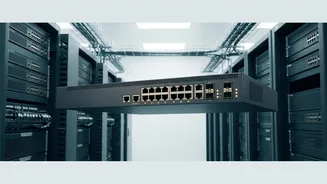
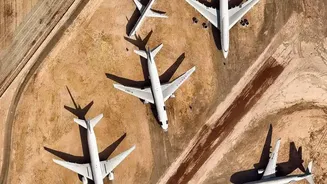
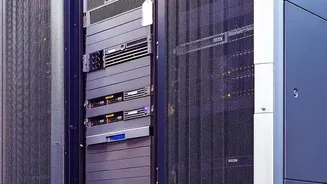
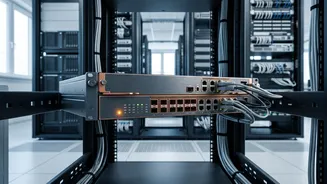
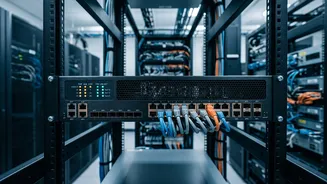
On Friday, November 13, 2026, the Federal Aviation Administration (FAA) took the rare and drastic step of issuing a nationwide ground stop, halting all domestic departures for more than four hours. The order stranded thousands of travellers and caused a cascade of delays and cancellations that rippled through the system for days. Unlike the ground stop after the 9/11 attacks, this disruption wasn't caused by a malicious act. Instead, the preliminary cause pointed to a telecommunications failure within the FAA's own network. According to officials, the problem began when newly installed routers started flooding the legacy system with an overwhelming number of connection requests, causing instability in aircraft communications and radar feeds at 17 of the FAA's 22 regional control centres. Out of an abundance of caution to ensure safety, the agency grounded all planes until the system could be stabilized.
The Real Culprit: Decades of Technical Debt
While a faulty router may have been the trigger, the underlying cause is far more systemic. America's air traffic control system is a complex patchwork of technologies, some of which date back decades. These systems were designed for a different era of aviation and have been patched and updated over the years rather than fully replaced. This accumulation of outdated technology is often called 'technical debt'. Just like financial debt, it comes with interest in the form of higher maintenance costs, frequent workarounds, and an ever-increasing risk of catastrophic failure. Many of these systems are difficult and expensive to maintain, and in some cases, the hardware is so old that replacement parts are no longer manufactured. This fragility was exposed in a similar incident in January 2023, when a failure in the Notice to Air Missions (NOTAM) system, caused by a corrupted database file during routine maintenance, also led to a nationwide ground stop.
Why Is Upgrading So Difficult?
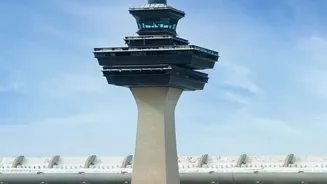
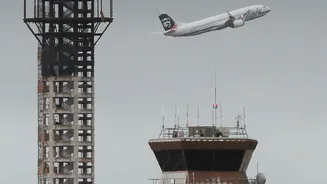
Modernizing a system that manages thousands of flights per day is akin to changing the engine on a plane while it's in mid-air. The process is fraught with complexity, cost, and risk. Upgrades must be performed with zero downtime, requiring new systems to run in parallel with legacy ones to ensure a seamless and safe transition. This process is enormously expensive. While Congress approved $12.5 billion for ATC modernization in July 2025, officials have stated this was merely a 'down payment'. In the wake of the November ground stop, the administration requested an additional $50.1 billion to overhaul the entire system, from telecommunications and software to replacing physical control towers and consolidating control centres. However, such requests face scrutiny, with lawmakers questioning why billions in previously allocated funds have yet to be fully spent, highlighting the bureaucratic and logistical hurdles that slow down procurement and deployment.
The Path to a Modern Sky
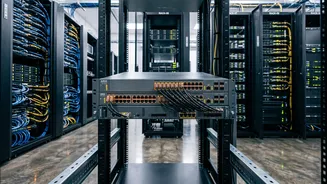
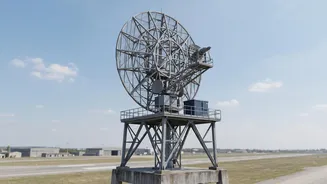
Despite the challenges, the modernization effort, known as the Brand New Air Traffic Control System (BNATCS) initiative, is underway. The FAA is working to replace old copper telecommunications lines with modern fiber, satellite, and wireless connections. It is also replacing hundreds of legacy radar systems, installing digital voice switches, and moving away from paper flight strips to digital systems. In some facilities, technology that once relied on floppy disks is finally being replaced with streamlined 21st-century systems. The overall goal is to move toward more resilient, cloud-based architectures and break up monolithic codebases into smaller, more manageable microservices that can be updated more easily. This includes leveraging AI and predictive analytics to better manage air traffic flow and anticipate disruptions before they happen.