




An Ocean of Molten Iron
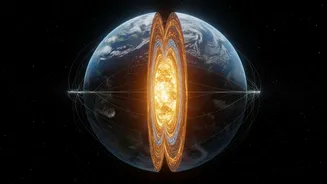
More than 2,200 kilometres below the Earth’s surface lies the outer core, a superheated, swirling ocean of liquid iron. The constant motion of this electrically conductive fluid acts like a planetary dynamo, generating the magnetic field that is essential
for life. This field shields us from harmful solar radiation and cosmic rays. For decades, scientists studying subtle changes in the magnetic field believed that the flow of this molten core was a relatively stable, large-scale system, dominated by a gentle westward drift. This long-held assumption was based on years of ground-based observations and provided a predictable, if incomplete, picture of our planet's deep interior.
The 2010 Pacific Anomaly
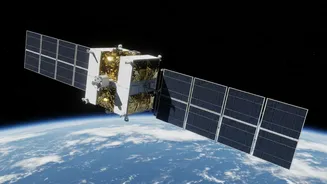
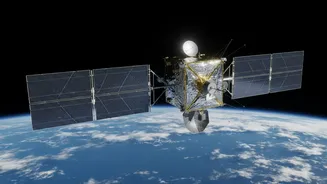
That stable picture was shattered in 2010. Deep beneath the equatorial Pacific Ocean, a massive region of the core’s flow did something unexpected: it reversed direction. What was previously a weak westward movement abruptly shifted, becoming a strong eastward flow. This sudden change, happening over a remarkably short geological timescale, challenged the core principle of a slowly evolving outer core. The discovery was made possible by combining nearly three decades of ground observations with high-precision data from a fleet of satellites, including the European Space Agency's Swarm and CryoSat missions. These orbiting sentinels can distinguish the magnetic signals originating from the core from other magnetic sources, allowing for an unprecedented reconstruction of the flow patterns at the core-mantle boundary.
A 'Geomagnetic Jerk'
Scientists are still working to understand the exact cause of this dramatic reversal, but it is linked to phenomena known as “geomagnetic jerks.” These are abrupt, rapid changes in the Earth's magnetic field that interrupt its otherwise steady evolution. These events are thought to be caused by powerful waves, called Alfvén waves, which are radiated from deep within the core, perhaps from buoyant blobs of molten material being released. As these waves travel outwards and reach the surface of the core, they can create sharp, localised changes in the liquid iron's flow, producing the 'jerks' observed on the surface. The 2010 event under the Pacific appears to be a particularly dramatic example of this process, a rapid shift that has forced a major rethink of core dynamics.
Why This Deep-Earth Drama Matters
While an event occurring thousands of kilometres underground may seem remote, it has significant implications. Understanding the behaviour of the outer core is crucial for predicting the future of Earth's magnetic field. This protective shield is not static; it weakens, strengthens, and even flips polarity over geological time. The discovery that large-scale changes can occur in just a few years, rather than centuries or millennia, introduces a new level of unpredictability. Furthermore, some scientists hypothesise that these deep interior changes are connected. The 2010 Pacific flow reversal occurred around the same time as observed changes in the behaviour of the solid inner core, suggesting a dynamic link between Earth's deepest layers. Continued monitoring is essential to determine if this reversal is a temporary fluctuation, part of a regular cycle, or a sign of a new, more permanent state of core circulation.