



The RBI's Decision: A Steady Hand
In its latest bi-monthly meeting concluding on August 5, 2026, the Reserve Bank of India's (RBI) Monetary Policy Committee (MPC) unanimously decided to keep the benchmark policy repo rate unchanged at 5.25%. This marks the fourth consecutive time the rate has
been held, signaling the central bank's cautious and data-dependent approach in a complex global environment. The committee also maintained its 'neutral' policy stance, which keeps its options open for future meetings without committing to a rate hike or cut. The decision was widely anticipated by market experts and provides a degree of predictability for the economy.
What Exactly is the Repo Rate?
Think of the repo rate as the interest rate at which the RBI lends money to commercial banks. It is a powerful tool used to control inflation and manage liquidity in the financial system. When the RBI wants to curb inflation, it raises the repo rate, making borrowing more expensive for banks. Banks, in turn, pass this cost on to consumers by increasing interest rates on loans like home loans and car loans. Conversely, when the goal is to stimulate economic growth, the RBI cuts the repo rate, making borrowing cheaper for banks and, eventually, for consumers. An unchanged rate, like the current one, aims to maintain balance in the economy.
The Link to Your Floating-Rate EMI
For the average person, the most direct impact of the repo rate is on their Equated Monthly Instalments (EMIs) for floating-rate loans. Most new home loans, auto loans, and personal loans are linked to an External Benchmark Lending Rate (EBLR), which is often the RBI's repo rate itself plus a spread charged by the bank. With the repo rate held at 5.25%, borrowers with loans linked to this benchmark will not see any immediate change in their EMIs. This provides stability and makes financial planning easier for households. It's important to note that loans linked to older benchmarks, like the Marginal Cost of Funds Based Lending Rate (MCLR), may see adjustments based on the bank's own cost of funds, but a stable repo rate reduces the pressure for upward revisions.
Why the RBI Chose to Wait and Watch
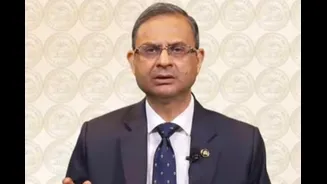
The MPC's decision to hold rates is a balancing act between managing inflation and supporting economic growth. RBI Governor Sanjay Malhotra noted that while the domestic economy remains resilient, there are persistent global uncertainties. The central bank upgraded its GDP growth forecast for the financial year 2026-27 to 6.7%, but highlighted that headline inflation has edged up due to rising food and fuel prices. The RBI expects inflation to peak in the third quarter before moderating. By keeping the rate steady, the committee is choosing to wait for more clarity on the inflation trajectory and global developments before making its next move.
What Should Borrowers Do Now?
For existing borrowers with floating-rate loans, the current decision means their EMIs are stable for now. This period of stability is a good opportunity to review your loan details, including the benchmark it's linked to and the spread being charged. For those planning to take a new loan, the current interest rate environment is predictable. While rates are not falling, they are also not rising, allowing prospective buyers to make informed decisions. Experts suggest that comparing offers from different lenders based on the spread, processing fees, and other terms is more crucial than waiting for a potential rate cut in the near future.
The Outlook for Interest Rates
With a 'neutral' stance, the RBI is not ruling anything out. The path forward will be heavily data-dependent. Governor Malhotra stated the central bank is neither 'dovish nor hawkish' and will be guided by how inflation and growth evolve. Some economists believe the central bank will continue to hold rates for the remainder of the year, watching for risks like an uneven monsoon or volatile global crude oil prices. Others suggest that if inflation pressures from food and fuel do not spread more broadly, the RBI might have room to consider a rate cut in early 2027. The next MPC meeting, scheduled for October 2026, will be closely watched for any change in tone or outlook.