






Why a Daily Routine Fails in Monsoon
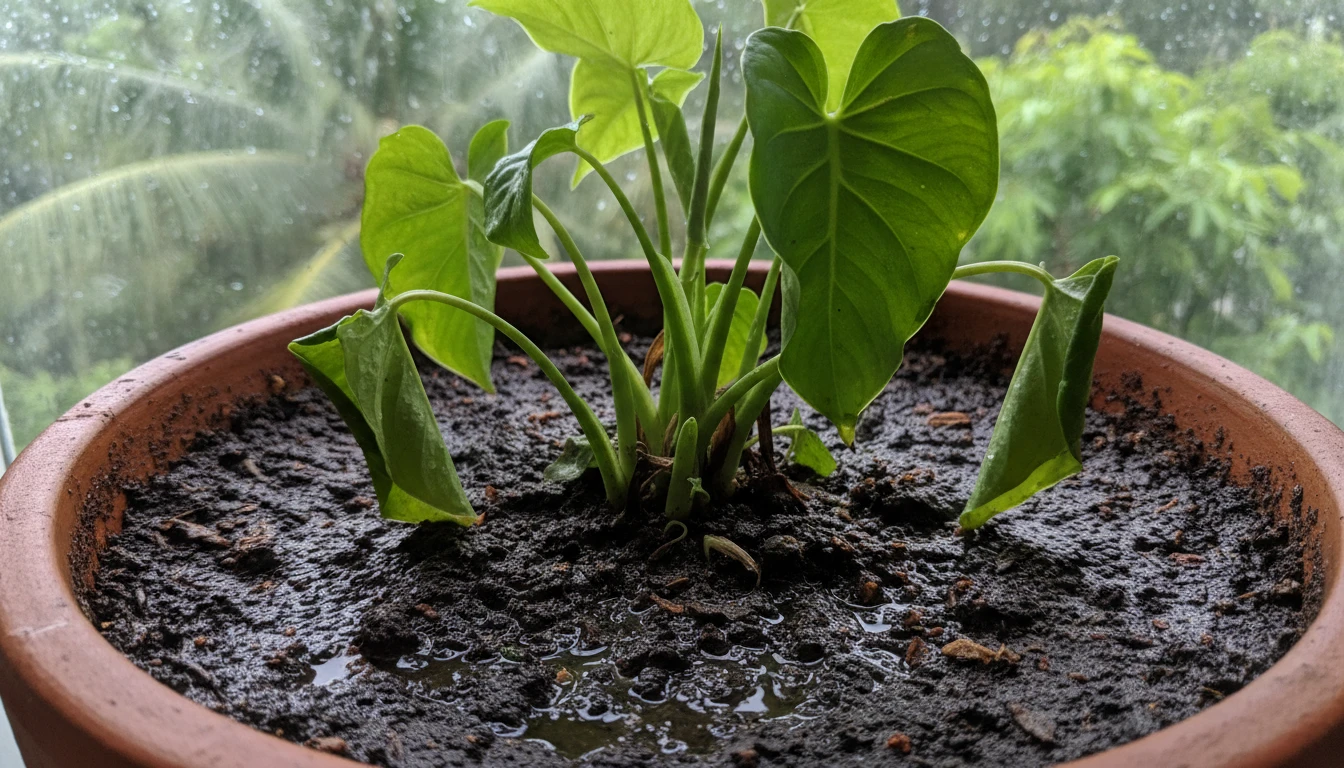
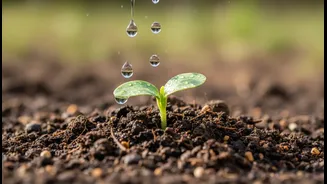
During hot summers, daily watering might be necessary as soil dries out quickly. However, the monsoon changes everything. High humidity, cooler temperatures, and overcast skies mean the soil retains moisture for much longer. Continuing a daily watering habit
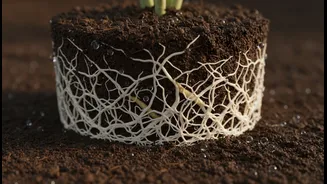
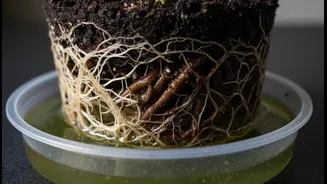
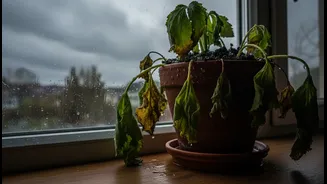
on top of intermittent rainfall is a recipe for disaster. The most common problem is overwatering, which leads to waterlogged soil. This suffocates plant roots by cutting off their oxygen supply, a condition that can cause them to rot. Healthy roots are essential for absorbing nutrients and water, so when they are compromised, the entire plant suffers. Signs like yellowing, limp leaves, and mushy stems are classic indicators of a plant struggling with too much water.
The Finger Test: Your Best Moisture Meter
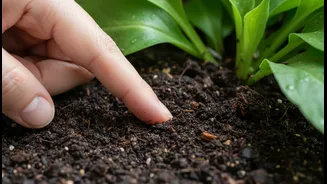
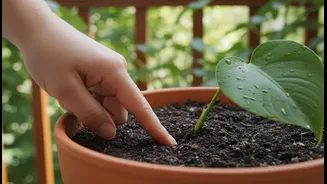
The simplest, most effective way to know if your plants need water is the 'finger test'. It requires no special equipment and gives you a direct sense of the conditions your plant's roots are experiencing. To perform the test, simply insert your index finger about two inches into the soil, near the base of the plant. If the soil feels dry and crumbly at that depth, it is time to water. If your finger comes out with moist soil sticking to it, the plant has enough water for now. In this case, you should wait another day or two before checking again. This single technique prevents both overwatering and underwatering, making you a more responsive and effective gardener.
Beyond the Finger: Other Ways to Check
While the finger test is fantastic, other methods can also help you gauge soil moisture. A simple wooden skewer or chopstick works like a dipstick for your pots. Push it deep into the soil and leave it for a minute. If it comes out clean and dry, the plant needs water. If it's damp with soil clinging to it, hold off. Another method is simply lifting the pot. A well-watered pot will feel significantly heavier than a dry one. With practice, you'll learn the 'dry weight' of your pots. For those who prefer a more technical approach, an inexpensive soil moisture meter can provide a quick reading, though it's best to take measurements in a few different spots for accuracy.
The Critical Role of Good Drainage
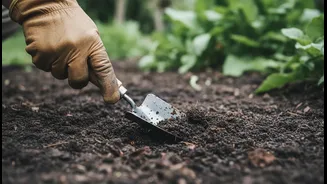
Even with perfect watering technique, your efforts can be undermined by poor drainage. During the monsoon, ensuring that excess water can escape is paramount. For potted plants, this starts with making sure the drainage holes at the bottom of the pot are not blocked. If water can't get out, the soil will become saturated, regardless of how carefully you water. Elevating pots on stands or bricks can also improve airflow and drainage. For garden beds, improving soil structure is key. Adding organic matter like compost helps create pathways for water to drain away, preventing it from pooling around roots. In areas prone to waterlogging, creating raised beds can be an excellent solution.
Creating a Flexible Watering Plan
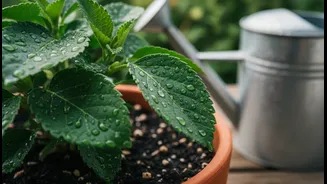
So, what does a smart monsoon watering plan look like? First, abandon the fixed calendar. Instead, make it a routine to check your plants every morning. Morning is the best time to water if needed, as it allows the leaves and soil surface to dry out during the day, reducing the risk of fungal diseases. Check the soil of each plant individually—a plant in a sunny spot will dry out faster than one in the shade. Remember to water the soil at the base of the plant, not the leaves, as wet foliage encourages fungal growth, a common problem in the humid monsoon climate. Adjust your frequency based on rainfall. After a good downpour, you may be able to skip watering for several days.