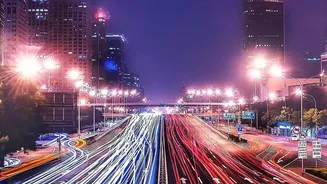







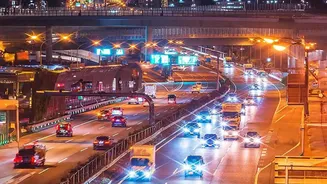
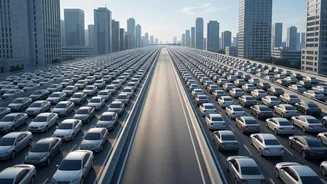
The Problem: A City Gridlocked
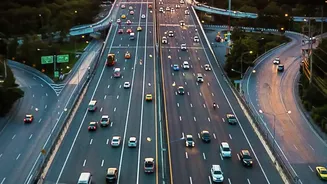
Anyone who navigates Delhi's roads knows the daily struggle. With over 71 lakh active vehicles, the city's infrastructure is under immense pressure. For years, vehicular growth has far outpaced the expansion of the road network, leading to chronic congestion,
lost productivity, and high pollution levels. Most of the city's 1,500+ traffic signals operate on fixed timers, unable to adapt to the fluctuating flow of vehicles, creating unnecessary stops and snarls. This inefficiency also contributes to a grim safety record. For the third year in a row in 2024, Delhi recorded the highest number of road accident fatalities among 53 major Indian cities. The existing system, largely dependent on manual intervention, is simply no longer sufficient for a megacity.
The Solution: An 'Intelligent' Overhaul
The approved Intelligent Traffic Management System (ITMS) is a comprehensive plan to add a 'brain' to the city's traffic infrastructure. Implemented by the Delhi Police, the project aims to make the road network safer, smoother, and more efficient by using real-time data instead of static schedules. The plan will be rolled out in three phases over 24 months, targeting 42 of Delhi's busiest traffic corridors. This involves installing AI-powered systems at 1,092 traffic signal locations and setting up 1,029 automated enforcement stations across the city. The Centre for Development of Advanced Computing (C-DAC) will serve as the technical consultant, ensuring the complex technology is implemented correctly.
How Will the AI Actually Work?
At its core, the ITMS relies on a network of AI cameras and sensors that constantly monitor traffic. This data feeds into a central system that uses algorithms to make smart decisions in real-time. One key feature is the Adaptive Traffic Control System (ATCS), which automatically adjusts the duration of red and green lights based on traffic density and vehicle queues. The system can also coordinate signals along a corridor to create 'green waves', allowing traffic to flow smoothly with fewer stops. For commuters, this means real-time traffic updates about congestion or accidents will be displayed on variable message signs and shared with navigation apps.
More Than Just Green Lights
The project's scope extends far beyond just managing traffic flow. A major component is automated enforcement. The AI-powered cameras will be able to detect a wide range of violations, including jumping red lights, speeding, wrong-way driving, not wearing a helmet or seatbelt, and using a mobile phone while driving. This is intended to improve driver discipline and road safety. The system will also give priority to emergency vehicles by creating dedicated green corridors for ambulances, allowing them to navigate congested areas much faster. Furthermore, AI analytics will help police identify stolen vehicles or those involved in hit-and-run incidents by cross-referencing number plates with databases.
The Big Question: Will It Work?
The Rs 1,789.52 crore investment comes with high expectations: reduced congestion, fewer accidents, lower emissions, and faster, more predictable travel times. However, the success of such a large-scale, technology-driven project is not guaranteed. Implementation will be a massive undertaking, requiring seamless coordination between multiple agencies. Integrating the new system with existing infrastructure presents a significant technical challenge. Data privacy is another concern that will need to be carefully managed. While the promise of a smarter, safer Delhi is compelling, citizens will be watching closely to see if this ambitious high-tech gamble can deliver on its promise to finally untangle the city's infamous traffic.