







A Victim of Its Own Success
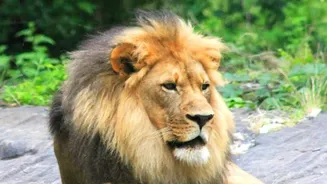
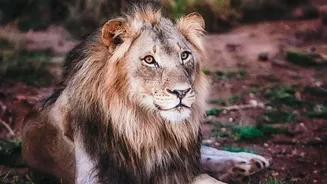
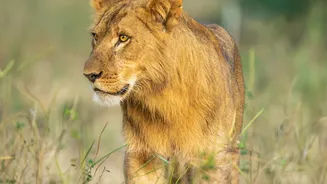
For over a century, the Gir forest has been the sole sanctuary for the world's last wild population of Asiatic lions. Conservation efforts have been incredibly successful, pulling the species back from the brink of extinction. From just a few dozen lions in the early
20th century, the population has grown to nearly 900, according to recent estimates. But this triumph has led to a serious problem. The core area of Gir is now overcrowded, and lions are increasingly spilling into the surrounding 35,000 square kilometres of human-dominated landscapes, leading to inevitable conflicts and accidents.
The Danger of a Single Home
Conservation scientists have long warned about the risks of keeping an entire species in one location. A single, catastrophic event—like an outbreak of disease—could be devastating. This fear became a reality in 2018 when a Canine Distemper Virus outbreak killed several lions in Gir, sounding a major alarm. More recent deaths from rabies and other diseases have highlighted the ongoing vulnerability. In 2013, the Supreme Court of India recognised this threat and ordered the translocation of some lions to create a geographically separate population, originally intended for Kuno National Park in Madhya Pradesh. However, Gujarat's reluctance to move its 'pride' outside the state stalled the project for years.
Why Barda Is the Chosen One
Under the central government's 'Project Lion', the focus has shifted to the Barda Wildlife Sanctuary, located about 100 kilometres from Gir but still within Gujarat. This makes the proposal more palatable to the state government. A detailed report by the Wildlife Institute of India (WII) has identified Barda as a suitable habitat, capable of supporting a founder population of around 40 lions. The sanctuary's rugged hills and forests offer a good prey base and ecological conditions for the big cats. Encouragingly, at least one lion has naturally migrated to Barda and stayed, proving its potential as a safe haven.
Preparing the New Refuge
Significant steps are now underway to prepare Barda for its new residents. The Gujarat government has given its in-principle approval and has begun restructuring the local forest administration to enhance monitoring and protection. A key part of the preparation involves habitat management, which includes thinning dense thickets to improve access for herbivores, the lions' natural prey. Furthermore, a voluntary relocation scheme has been announced, offering financial compensation to semi-nomadic pastoralist families, or 'maldharis', living within the sanctuary. This move aims to reduce human pressure on the ecosystem and create an undisturbed area for the lions to thrive.