







A Dramatic, Historic Flight
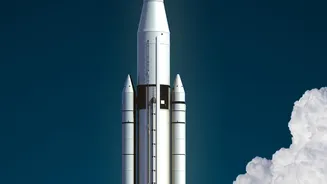
On September 28, the world's largest and most powerful rocket, standing at an imposing 407 feet, lifted off from SpaceX's Starbase facility in Texas. The mission, designated Flight 14, was not without its suspense. During the ascent, one of the upper
stage's Raptor engines shut down prematurely, leading to a tense period where mission control deliberated on whether to abort the orbital attempt. After a dramatic pause, the decision was made to press on. The remaining engines compensated, and approximately 25 minutes after launch, Starship successfully entered low-Earth orbit, a monumental first for the program. While the mission was originally planned to last nearly ten hours, the team opted to shorten it to about three hours as a precaution due to the engine issue.
More Than a Joyride: A Working Rocket
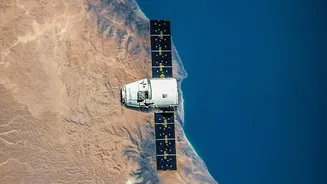
The true success of this mission wasn't just reaching orbit; it was what Starship did once it got there. In a crucial demonstration of its intended function, the vehicle opened its payload bay and successfully deployed 26 next-generation Starlink V3 satellites. This marked Starship's first-ever revenue-generating mission, transitioning it from a test project to a functional commercial launcher. These new V3 satellites are significantly more capable than their predecessors, with each one designed to handle about ten times more data. According to SpaceX, this single launch added the bandwidth capacity equivalent of roughly ten launches of its workhorse Falcon 9 rocket, showcasing the immense efficiency gains Starship represents. All 26 satellites were confirmed to be operating normally after deployment.
The Long Road to Orbit
This success was built on a series of previous test flights that often ended in what SpaceX famously termed “rapid unscheduled disassembly.” The company has maintained a philosophy of iterative development, launching, learning from failures, and rapidly implementing changes. Previous flights tested critical maneuvers like the booster's return to Earth and the ship's atmospheric reentry. Flight 14 saw the Super Heavy booster perform a controlled splashdown in the Gulf of Mexico, another key step toward full reusability. While there were engine anomalies on both the booster and the ship during this flight, achieving the primary goals of reaching orbit and deploying a payload is seen by experts as a transformational milestone for SpaceX and the entire space industry.
What This Unlocks for the Future
A fully operational and reusable Starship is poised to drastically lower the cost of accessing space, much like the Boeing 747 revolutionized air travel. This capability is critical to several ambitious projects. First, it will accelerate the build-out of SpaceX's own Starlink internet constellation, with future flights expected to carry as many as 60 V3 satellites at a time. Second, Starship is a cornerstone of NASA's Artemis program, which aims to return astronauts to the Moon. NASA plans to use a modified Starship as the lunar lander for astronauts on missions targeted for the late 2020s. The success of this orbital mission, while not flawless, provides a much-needed boost of confidence that the vehicle is on the right track to support these future lunar ambitions. Beyond the Moon, the ultimate goal for Starship remains the human settlement of Mars, a feat its founder, Elon Musk, believes is only economically feasible with a rocket of this scale and reusability.