






A Legend Reborn, But Not By Audi
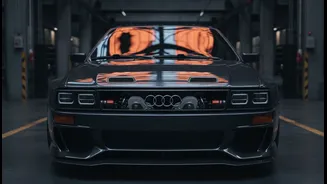
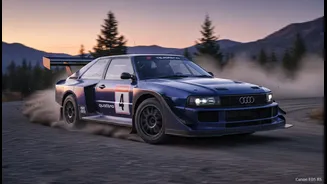
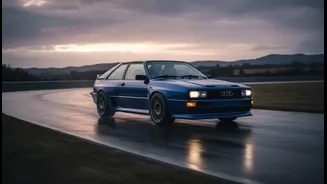
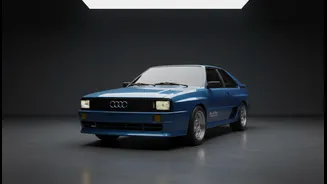
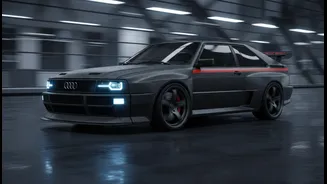
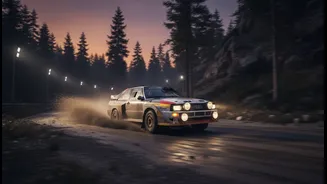
This spectacular machine is the HSR Manufaktur Type 859, a modern interpretation of the iconic 1984 Audi Sport Quattro. It is not an official Audi project but a creation from a company specializing in reimagining homologation specials. The process begins
with a period-correct donor chassis from an Audi Coupe B2. This chassis is then significantly modified, shortened in overall length but with a slightly stretched wheelbase to improve the high-speed stability that made the original car notoriously challenging. The goal is to capture the essence and raw energy of the Group B rally monster while refining its dynamics for the modern era.
The Heart of a Modern Beast
Underneath the classic silhouette lies a thoroughly modern powertrain. HSR has installed Audi's own turbocharged 2.5-liter, five-cylinder DAZA engine, familiar from the previous-generation RS3. However, it's far from standard. The engine is rebuilt with forged internals and a motorsport-grade dry-sump lubrication system. This allows for a driver-selectable power output ranging between 500 and 600 horsepower, a significant leap from the original's 306 horsepower. This potent engine is mounted longitudinally, sending power to all four wheels through a permanent all-wheel-drive system with a 40:60 rear-biased torque split, ensuring both immense grip and playful handling.
Understanding the Manual Drama
The headline's promise of "serious manual drama" comes from the choice of gearbox. The Type 859 uses a reinforced version of Audi's old OB4 six-speed manual gearbox. In an age dominated by dual-clutch automatics and seamless electric torque, the decision to use a traditional manual is a deliberate statement. It forces a level of engagement and mechanical connection between driver and car that is increasingly rare. Every gear change is a physical, satisfying event, demanding skill and rewarding precision. This isn't just about going fast; it's about the unfiltered, visceral experience of controlling a powerful machine, making the driver an integral part of the car's performance.
Carbon Fibre and Classic Lines
To keep weight to a minimum and maximize performance, the entire body is remade in lightweight carbon fiber. This modern material is draped over a chassis that includes a newly integrated roll cage for enhanced safety and structural rigidity. The total weight is reported to be around 1,200 kg, giving the Type 859 an incredible power-to-weight ratio that is claimed to be better than a Ferrari SF90. The result is a car that looks like a classic rally hero but possesses the lightweight, high-strength properties of a contemporary supercar.
The High Price of Analogue Purity
This level of bespoke engineering and performance comes at a significant cost. Production of the HSR Type 859 will be strictly limited to just 84 units, a nod to the year Audi won the World Rally Championship with the Quattro. Pricing starts at approximately $570,000, placing it firmly in the realm of exotic supercars and high-end collector vehicles. This is not just a car; it is a piece of rolling sculpture, a statement for enthusiasts who value mechanical purity and are willing to pay for the ultimate analogue driving experience in an increasingly digital world.