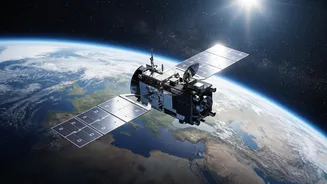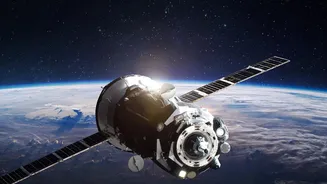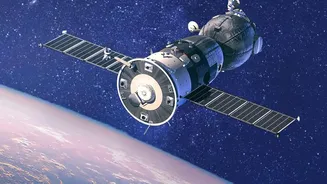





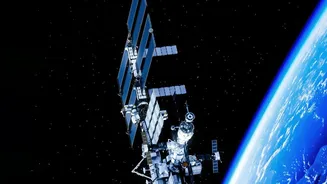

Floating 400 kilometres above Earth, two astronauts conducted a gruelling spacewalk lasting nearly seven hours, a critical step that marks the culmination of a five-year project to significantly upgrade the International Space Station's power grid.
The Mission and Its Crew
On
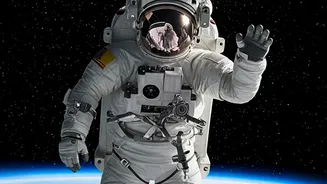
Thursday, November 5, 2026, NASA astronaut Anil Menon and Canadian Space Agency (CSA) astronaut Joshua Kutryk ventured outside the International Space Station (ISS) for a spacewalk that officially clocked in at six hours and 59 minutes. The marathon extravehicular activity (EVA) began at 8:36 a.m. EST and concluded at 3:35 p.m. EST. For Kutryk, wearing the red-striped suit as the lead spacewalker, it was his second EVA. For Menon, it marked his fifth time working in the vacuum of space. Their primary objective was to install the eighth and final ISS Roll-Out Solar Array (IROSA), a task that required immense precision, strength, and coordination with their crewmates and mission control back in Houston.
A Power Boost for a Orbiting Lab
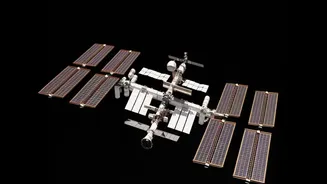
The main task was the grand finale of an ambitious power augmentation project that began back in 2021. The ISS has been continuously inhabited for over 25 years, and its original solar arrays, while still functional, have experienced natural degradation from the harsh space environment. The new, more efficient IROSA units are being installed over the existing arrays to boost the station's total power generation capacity. With this final installation, the station’s available power is expected to increase by about 30 percent, jumping from 160 kilowatts to approximately 215 kilowatts. This additional power is not just for keeping the lights on; it's essential for supporting more complex scientific experiments and ensuring the station remains a robust platform for research and technology development until its planned retirement in 2030.
A Choreographed Dance in Zero Gravity
Installing the rolled-up array, which measures about 63 feet when fully extended, at the far end of the station's starboard truss was a complex logistical challenge. The station's robotic arm, Canadarm2, did not have the reach to deliver the hardware directly to the installation site. This meant the astronauts had to perform a carefully coordinated handoff. Menon, attached to the end of the Canadarm2, carried the array as far as he could before passing it to a free-floating Kutryk. The pair then worked together to move the bulky equipment to its final position, bolt it into place, and connect the power cables. Despite encountering a brief issue with the power flow from the newly connected array, the team on the ground and in orbit worked through the problem to successfully complete the mission.
Why This Spacewalk Matters
Completing this five-year upgrade is a significant milestone for the ISS program. The enhanced power supply directly enables the cutting edge science conducted aboard the station, from medical research that benefits life on Earth to testing technologies for future deep space missions to the Moon and Mars. The new arrays, while smaller than the originals, are more advanced and efficient, representing a leap forward in solar power technology. This spacewalk, the 286th in support of station assembly and maintenance, showcases the incredible capability of human and robotic cooperation in one of the most challenging environments imaginable. It ensures that the orbiting laboratory will remain a powerful and productive scientific outpost for the remainder of its operational life.