







Welcome to Project Camellia
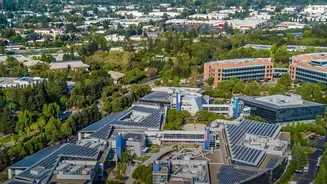
The ambitious plan, codenamed "Project Camellia," involves building a massive data center campus in Effingham County, Georgia, a mostly rural area about a 30-minute drive from Savannah. This isn't just an office building; it's the engine for OpenAI's
future AI models. The proposal marks the first time the company behind ChatGPT will build its own data center from the ground up, a significant strategic shift from its current model of leasing capacity from third-party operators. The site, located within the Savannah Gateway Industrial Hub, is expected to span approximately 1,400 acres and consist of four main buildings. This development represents one of the largest private economic investments in the region's history, signaling OpenAI's intention to control its own infrastructure destiny.
The Astonishing Power Demands
A key reason for the $20 billion cost is the project's almost unfathomable need for electricity. To power the next generations of AI, Project Camellia will require 3.2 gigawatts of power, secured through a 25-year agreement with Georgia Power. To put that in perspective, that's enough energy to power over two million homes. This enormous power draw is more than triple the one-gigawatt size that industry analysts typically use as a benchmark for major AI data centers. The power is scheduled to be delivered in phases between 2028 and 2032. Recognizing the strain this could put on the local grid, OpenAI has agreed to pay for all related infrastructure costs and will employ a flexible demand response system, allowing Georgia Power to reduce energy delivery to the campus by up to one gigawatt during peak hours to ensure grid stability.
More Than Just Construction Costs
While the construction of four buildings totaling over 4 million square feet is a major expense, the $20 billion figure, which some company insiders suggest could eventually exceed $30 billion, encompasses far more. OpenAI is funding the entire cost of the required power infrastructure and service. The company has also committed to significant community investments, including $80 million for local education, healthcare, and public safety initiatives. Furthermore, it plans to provide $71 million in credits for its Codex coding tool to eligible students in Georgia. The project is expected to create thousands of construction jobs and will eventually employ up to 1,000 permanent workers in high-paying roles once fully operational around 2032.
A Bet on the Future of AI
This move is part of a much larger infrastructure spending plan by OpenAI, which has reportedly earmarked $750 billion for cloud computing and data centers through 2030. By building its own campus, OpenAI gains greater control over the design, security, and operation of the specialized hardware needed for advanced AI research. It also reflects a growing trend among tech giants to vertically integrate their most critical operations. While the company continues to expand its office footprint in places like San Francisco and Mountain View, Project Camellia is different; it’s not for people, but for the machines that power the company’s intelligence. In a landscape where computational power is the most critical resource, this campus is a monumental bet on OpenAI's ability to stay at the forefront of the AI revolution and build the foundational technology of the coming decades.