




The Golden Age of Sky Surveys
For decades, astronomy has been dominated by a powerful idea: the large sky survey. Telescopes, both on the ground and in space, have been tasked with systematically scanning huge patches of the sky, night after night, to catalogue billions of stars and galaxies.
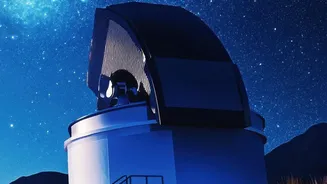
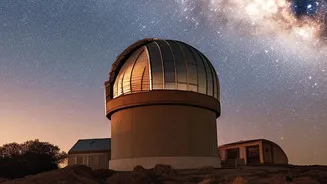
Projects like the Vera C. Rubin Observatory are designed to do just this, creating an unprecedented moving map of the universe by observing the entire southern sky every few nights. These surveys are crucial for finding transient events like supernovae and tracking asteroids, building a massive database that helps us understand the grand structure of the cosmos and the objects within it. The strategy is straightforward: go wide, observe everything, and let the discoveries roll in. This approach has become the bedrock of modern observational astronomy, yielding troves of data that have fueled countless discoveries.
A New Player Enters the Field
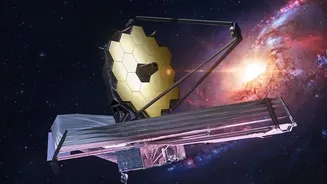
Enter the Nancy Grace Roman Space Telescope. Named after NASA’s first chief of astronomy, Roman is a game-changer. While it has a primary mirror the same size as the Hubble Space Telescope, its Wide Field Instrument can see an area of the sky 100 to 200 times larger than Hubble's infrared camera. This means Roman can create deep, Hubble-quality images over vast areas at a speed up to 1,000 times faster. While a ground-based telescope like the Rubin Observatory can see a wider area overall, Roman does it from space, avoiding the blurring effect of Earth's atmosphere to produce much sharper images. It’s a survey telescope on steroids, combining the depth and clarity of Hubble with an enormous field of view, designed to tackle huge cosmic mysteries like dark energy and exoplanet demographics.
A Tsunami of High-Quality Data
Here's where the questions begin. Roman's efficiency presents a “good problem” for astronomers. The telescope is projected to generate an enormous amount of data—on the order of 11 terabits per day. This sheer volume is a challenge in itself, but the bigger question is strategic. If Roman can capture a deep, sharp image of a large area so quickly, how does that change the plans for ground-based surveys? Why spend years mapping an area from the ground if Roman can get a higher-resolution snapshot in a fraction of the time? This capability is forcing science teams to move beyond just planning their own surveys and start thinking about how to work together. The discussion is no longer about competition, but about coordination and maximizing scientific return in an era of overlapping, incredibly powerful instruments.
Collaboration, Not Competition
The answer emerging from the astronomical community is not to sideline other surveys, but to integrate them. The Roman and Rubin observatories are now seen as powerful partners. Roman's sharp space-based images can be used to calibrate and de-blur the wider, but less sharp, images from Rubin. Scientists can use Roman to get a high-resolution look at rare or interesting objects discovered by Rubin. Furthermore, the telescopes observe in different wavelengths of light—Rubin primarily in optical and Roman in near-infrared—making their data highly complementary. By combining observations, astronomers can get a much more complete picture of celestial objects, from their temperature to their composition. This synergistic approach allows each telescope to play to its strengths, creating a whole that is far greater than the sum of its parts.