

The Quintessential Creamy Dal
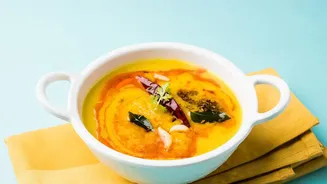
When you think of urad dal, the first dish that often comes to mind is the iconic Dal Makhani. This beloved North Indian curry gets its signature creamy, velvety texture from slow-cooking whole black urad dal (sabut urad) with rajma (kidney beans). The
lentils are simmered for hours with tomatoes, ginger, garlic, and a generous amount of butter and cream, allowing the dal to break down and become incredibly rich. While traditionally cooked over a low flame for a long time, pressure cookers and slow cookers can also be used to achieve that perfect, melt-in-your-mouth consistency. The result is a deeply flavourful, comforting dish that pairs perfectly with naan or rice, showcasing urad dal's ability to create luxurious gravies.
The Magic of Fermentation
In South India, urad dal is the secret behind the light, airy texture of two breakfast staples: idli and dosa. When soaked, ground, and fermented with rice, urad dal works its magic. Its natural mucilaginous properties help in the fermentation process, creating a batter that rises and is full of air bubbles. This is what gives idlis their signature spongy softness and dosas their desirable crispiness. For the best results, whole, unpolished urad dal is often recommended as it retains more of the properties that aid fermentation. This application highlights a completely different side of the lentil, proving its essential role in creating some of India's most iconic fermented foods.
The Perfect Crispy Fritter
If you crave a crunchy, savoury snack, look no further than Medu Vada. These doughnut-shaped fritters are a South Indian classic, famous for their crispy exterior and fluffy interior. The batter is made by grinding soaked urad dal into a thick, coarse paste, often with minimal water to maintain its consistency. This thick batter is then seasoned with ingredients like green chillies, ginger, curry leaves, and onions before being shaped into rings and deep-fried to golden perfection. Often served with sambar and coconut chutney, medu vadas are a testament to how urad dal can create snacks that are simultaneously crisp and soft.
Beyond the Batter: Crunchy Snacks
The versatility of urad dal extends to dry, crispy snacks as well. Urad dal flour is a key ingredient in making papad (or papadum), the thin, crisp discs that are an essential accompaniment to many Indian meals. The dal is ground into a paste or flour, seasoned, and then rolled out thin and sun-dried before being fried or roasted. Another popular snack is murukku, a spiral-shaped, crunchy treat where urad dal flour is often mixed with rice flour to provide flavour and a brittle texture. In some regions, urad dal is also used to make 'vadi' or 'badi', which are sun_dried lentil dumplings that can be stored and later added to curries for extra texture and protein.
An Unexpected Sweet Side
While it excels in savoury dishes, urad dal can also be transformed into delightful sweets. Sunnundalu, or Urad Dal Ladoo, is a traditional sweet from Andhra Pradesh made with roasted urad dal flour, ghee, and powdered sugar or jaggery. The dal is roasted until aromatic, ground into a fine powder, and then mixed with melted ghee and the sweetener to be shaped into nutrient-'dense ladoos. Another dessert is Urad Dal Halwa, a rich and creamy pudding made by roasting the dal paste in ghee and then cooking it with milk and sugar until it thickens. These sweets are not only delicious but also packed with protein,' often prepared during festivals or as a nourishing treat.