






A New Global Leader
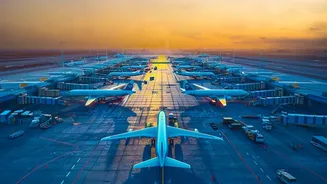
In the first half of 2026, Incheon welcomed 38.39 million international passengers, edging out Heathrow's 37.79 million, according to preliminary data from Airports Council International (ACI). This marks a historic moment for the South Korean airport,
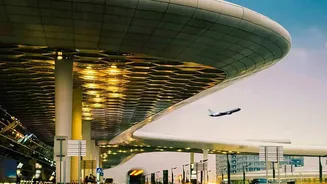
which only opened in 2001. The shift is not just a matter of numbers; it reflects broader changes in global travel patterns, infrastructure investment, and passenger priorities. While Heathrow remains a critical hub, Incheon's rapid ascent highlights a different strategy for growth, one heavily focused on passenger experience and operational efficiency from the ground up.
The Incheon Advantage: Strategy and Service
Incheon's rise to the top spot can be attributed to a combination of strategic planning and world-class service. The airport was named the world's second-best airport overall in the 2026 Skytrax World Airport Awards, praised for being one of the most user-friendly and family-friendly airports globally. It has focused on becoming a major transit hub for Northeast Asia, a strategy that has paid dividends. Recent geopolitical events, such as conflict in the Middle East, have diverted transfer traffic from hubs like Dubai, with Incheon absorbing a significant number of these passengers. This led to an 18% surge in transfer passengers, including a 63.2% jump in those heading to Europe. Furthermore, consistent and aggressive infrastructure expansion, including the completion of its fourth phase of construction, has given Incheon the capacity to handle 106 million passengers annually. Technological innovations like the 'Smart Pass' biometric system, which allows travelers to move through check-in and boarding without passports, have also streamlined the passenger journey.
Heathrow's Headwinds
While Heathrow remains one of the world's most important airports, it faces a different set of challenges. Unlike Incheon, Heathrow is a much older airport, with some of its core infrastructure dating back decades. Airlines have voiced concerns over negative passenger experiences, citing long security lines, baggage system failures, and a perception that the airport has been slow to modernise. In one survey, 90% of airlines operating at the hub believed the way it is run impacts its effectiveness. Even seemingly minor issues, like cultural differences in how pedestrians navigate corridors, can contribute to a feeling of congestion in its terminals. While expansions are planned, the airport operates within significant physical and logistical constraints, making the kind of ground-up redesign seen at newer Asian and Middle Eastern hubs nearly impossible.
What Defines a Top Airport Today?
The changing of the guard from Heathrow to Incheon signifies a broader evolution in what makes an airport world-class. It's no longer just about the number of runways or gates. According to the Skytrax awards, which are based on global passenger surveys, the leading airports function like mini-cities. They excel in areas like staff service, cleanliness, immigration efficiency, and the quality of shopping and dining. Modern travelers expect a seamless, comfortable, and even enjoyable experience. Airports like Singapore Changi (ranked number one by Skytrax), Incheon, and Tokyo Haneda consistently top the lists because they combine efficiency with high-quality amenities, from indoor waterfalls to extensive lounge options. This holistic approach, which treats time in the terminal as a key part of the journey, is where Asian hubs have set a new global standard.