








A Perfect Liftoff from Sriharikota
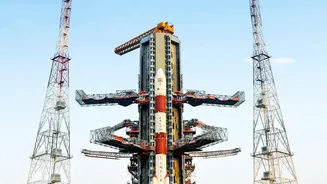
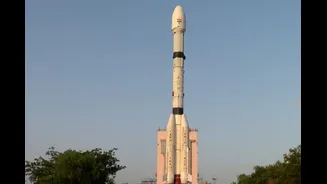
The Indian Space Research Organisation (ISRO) marked its first successful mission of 2026 with a spectacular pre-dawn launch. At 2:55 AM IST, the Geosynchronous Satellite Launch Vehicle (GSLV-F17) lifted off from the Satish Dhawan Space Centre in Sriharikota,
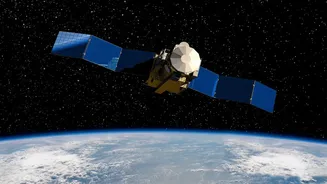
lighting up the night sky. About 18 minutes later, the rocket successfully deployed its precious cargo, the EOS-05 satellite, into its intended sub-geosynchronous transfer orbit. The launch was a significant moment for ISRO, coming after a seven-month gap and serving as a welcome success. ISRO Chairman V Narayanan confirmed the precise injection into orbit, calling it a great achievement for the nation's space programme. The mission's success demonstrates the reliability of the GSLV rocket, which placed the heaviest satellite it has ever carried, weighing 2,367 kg, into orbit.
India’s New ‘Eye in the Sky’
The star of this mission is the EOS-05, a state-of-the-art Earth observation satellite. Unlike many other remote sensing satellites that operate in low Earth orbit, EOS-05 is destined for a geosynchronous orbit approximately 36,000 kilometres above the Earth. At this altitude, the satellite's orbital period matches Earth's rotation, allowing it to seemingly hover over the Indian subcontinent. This unique position makes EOS-05 India's first dedicated geo-orbit imaging satellite. Its capability to provide near real-time imagery of a large area is a major leap forward. The satellite is designed to image large sections of the Indian subcontinent every five minutes, a feat that will provide an unprecedented stream of data for various applications.
Mission Objectives and National Impact
The capabilities of EOS-05 translate directly into significant benefits for the country. Scientists have described the satellite as an 'eye in the sky' that will enhance India's ability to monitor weather patterns, natural disasters, and environmental changes. It will provide crucial, near-continuous data for disaster management, helping to track cyclones, floods, and forest fires in near real-time. The satellite's advanced imagers will also be invaluable for agriculture, providing insights into crop health and land use. Beyond civilian uses, the mission has strategic importance, with applications for border surveillance and national security. The successful deployment places India among a select group of nations with geostationary imaging satellite capabilities, opening up new commercial avenues for its private space sector.
A Key Piece of the 2026 Puzzle
This successful launch is a critical component of ISRO's ambitious agenda for 2026. The organisation has a packed schedule, which includes preparations for the first uncrewed mission of the Gaganyaan programme, India's human spaceflight initiative. The success of the GSLV-F17 provides a morale boost and reaffirms the capabilities of ISRO's launch vehicles ahead of these even more complex missions. The 2026 programme is also focused on developing and demonstrating new technologies, such as advanced communication systems and electric propulsion for satellites. As ISRO continues to push the frontiers of space exploration, missions like EOS-05 serve as both technological milestones and foundational steps. They not only deliver immediate strategic and developmental benefits but also build the capacity and confidence needed for future endeavours like sending Indian astronauts to space and establishing the Bharatiya Antariksh Station by 2035.