








Decoding the 'Inference Chip'
First, let's break down the terminology. In the world of artificial intelligence, there are two key processes: training and inference. Training is like teaching an AI model by feeding it massive amounts of data. It’s a resource-heavy process that builds
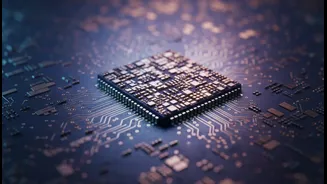
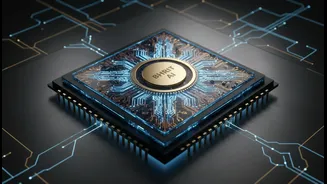
the model's knowledge. Inference, on the other hand, is when that trained model is put to work to make predictions or decisions on new, real-world data. An inference chip is a specialized processor custom-built for this exact task. Unlike general-purpose chips like CPUs or even the powerful GPUs used for AI training, inference chips are optimized for speed, power efficiency, and cost-effectiveness when running AI applications. Think of it as the difference between a library where you learn (training) and the quick, decisive thinking you apply in a real-life situation (inference). These chips power everything from speech and image recognition on your phone to complex decision-making in autonomous vehicles.
A Strategic Leap for 'Make in India'
The development of a domestic inference chip is a cornerstone of India's broader strategy for technological self-reliance, or 'Aatmanirbhar Bharat'. This move is part of the recently approved ₹1.27 trillion Semicon 2.0 mission, designed to build a complete semiconductor ecosystem within the country. By designing and owning the intellectual property for such a critical component, India aims to reduce its heavy reliance on foreign technology, particularly from global giants like Nvidia. This not only enhances national security by safeguarding critical digital infrastructure but also insulates the country from global supply chain disruptions and export controls that have impacted chip availability in the past. The project is being spearheaded by the Centre for Development of Advanced Computing (C-DAC), a government research organization with a four-decade history of developing India's indigenous computing capabilities.
The Path to 2030
The 2029-30 timeline announced by Minister Vaishnaw is both ambitious and calculated. According to officials, the processor is already undergoing trial production. To bridge the gap from design to a market-ready product, C-DAC has partnered with HCL Infosystems to validate the chip's design and performance. These trials will involve testing the chip across various systems and computing architectures to ensure it can handle real-world AI workloads. The eventual goal is to integrate these homegrown chips into domestic servers and IT infrastructure, powering public services and a wide array of AI use cases across the nation. While this specific project is funded under the National Supercomputing Mission, it is a key part of the larger Semicon 2.0 framework, which provides incentives for everything from factories and design firms to research and talent development.
More Than Just One Chip
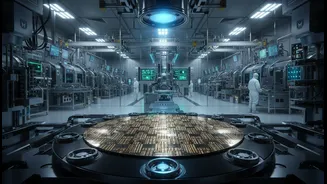
The inference chip project is a flagship initiative but represents just one piece of India's larger semiconductor puzzle. The India Semiconductor Mission (ISM) is fostering a multi-pronged approach to building a robust ecosystem. This includes setting up large-scale fabrication plants (fabs), with the first commercial production from these facilities expected to begin in 2026. The Tata Electronics joint venture with Taiwan's PSMC in Dholera, Gujarat, is a key example, poised to produce 50,000 wafer starts per month. The government is also heavily focused on creating a skilled workforce, having already trained nearly 70,000 semiconductor engineers against a 10-year target of 85,000. Over 300 universities are now equipped with industry-standard tools to teach chip design, ensuring a steady pipeline of talent to support this growing industry.
Challenges in a Global Race
While the ambition is clear, the path is not without significant challenges. The semiconductor industry is famously capital-intensive and defined by rapid technological evolution. India is competing with established ecosystems in Taiwan, South Korea, and the United States, which have decades of a head start. Success will depend not just on government investment but on sustained private sector participation, deep R&D, and the ability to attract and retain world-class talent. The Semicon 2.0 mission acknowledges this by extending support beyond just manufacturing to include the production of specialized equipment, chemicals, and gases required for the chip-making process. By building out the entire value chain, from design to packaging and materials, India hopes to create a resilient and competitive industry capable of holding its own on the global stage.