



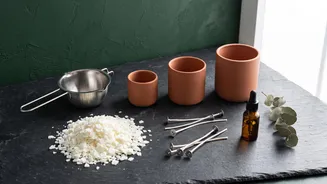
Start with the Right Foundation: Wax
Not all waxes are created equal when it comes to holding and releasing scent. While soy wax is a popular choice for beginners due to its clean burn and affordability, it's known for having a more subtle scent throw. For a powerhouse fragrance, many professional
candle makers turn to paraffin wax or paraffin-soy blends, often called 'para-soy'. These waxes are engineered to release fragrance more effectively when the candle is lit. Coconut wax blends are another excellent option, known for a slow burn and strong scent performance. The wax you choose is the very foundation of your candle's scent, so it's worth experimenting to see which type gives you the results you want.
The Unsung Hero: The Wick
The wick is the engine of your candle, and choosing the wrong one is a primary reason for a weak scent. A wick's job is to draw melted wax up to the flame via capillary action. If the wick is too small for your container, it won't be able to melt enough wax to release a significant amount of fragrance. This creates 'tunneling', where the candle burns straight down the middle, leaving unused wax on the sides. Conversely, a wick that's too large will create a dangerously high flame, smoke, and soot. The right wick creates a full 'melt pool' that reaches the edges of the container within a few hours, which is essential for a strong 'hot throw'—the scent released while burning. You must match the wick size to the diameter of your container and your specific wax and fragrance combination.
Consider Performance-Boosting Additives
To get that professional-quality finish and performance, candlemakers often use additives. These are ingredients added in small quantities to improve the candle's properties. Stearic acid, for example, is a plant-derived additive that can increase a candle's hardness and opacity, which can also help with burn time. Another common additive is Vybar. It helps bind the fragrance oil to the wax more effectively, which can enhance scent throw. However, there's a catch: using too much Vybar can actually trap the fragrance, so it's important to use it conservatively. These additives allow for greater control over your final product, helping you solve common issues like weak scent or an uneven finish.
Temperature and Timing Are Everything
The process itself is just as important as the ingredients. Specifically, you need to pay close attention to temperature. Adding your fragrance oil when the wax is too hot can cause the delicate top notes of the scent to burn off before the candle is even poured. Adding it when the wax is too cool prevents the oil from binding and dispersing properly. A general rule of thumb is to add fragrance oil when the wax is around 180-185°F (about 85°C), but this can vary depending on the wax. After adding the oil, stir gently but thoroughly for a full two minutes to ensure it's completely integrated before you pour. This step ensures the fragrance is evenly distributed for a consistent scent from top to bottom.
The Final, Crucial Ingredient: Patience
Perhaps the most overlooked 'ingredient' in candle making is time. Once your candle is poured and looks solid, it's not finished. It needs to cure. Curing is the process where the wax and fragrance oil molecules fully bind together. This quiet period, which can last from a few days to two weeks depending on the wax, is crucial for developing a strong scent throw. Lighting a candle too early can give you a false impression of a weak fragrance. Soy waxes typically require a longer cure time of 1-2 weeks, while paraffin may be ready in 3-5 days. This resting period allows the candle to stabilize, ensuring a better burn quality and unlocking its full aromatic potential.