



The Death of a Star
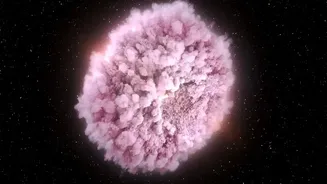
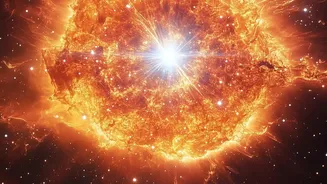
When a star many times more massive than our Sun runs out of fuel, it can no longer support its own immense weight. Gravity wins, and its core collapses in on itself in a fraction of a second. This cataclysmic event is expected to trigger a massive explosion
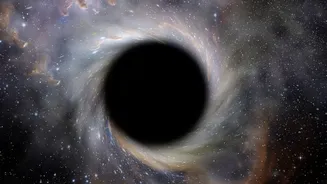
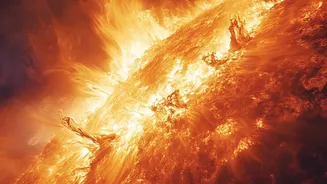
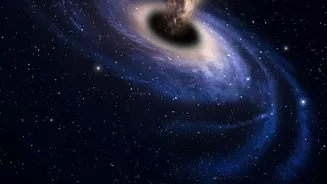
known as a core-collapse supernova, which can outshine an entire galaxy. During this collapse, the core becomes incredibly hot and dense, creating an enormous number of ghostly particles called neutrinos. In fact, about 99% of the energy from a dying star is carried away by these neutrinos. For decades, scientists have believed that a small fraction of these neutrinos push against the star's outer layers, reigniting the stalled explosion and blowing the star apart. But sometimes, the explosion fails, and the star collapses directly into a black hole. The question is, why?
Enter the Ghost Particle
Neutrinos are fundamental particles with almost no mass and no electric charge. Trillions of them pass through your body every second without you ever noticing. They are often called 'ghost particles' because they interact so weakly with other matter. In the ultra-dense environment of a collapsing star, however, even these weak interactions become hugely important. The sheer number of neutrinos produced is staggering, and their ability to deposit energy into the surrounding gas is thought to be the engine that drives the supernova explosion itself. If they transfer enough energy, the star explodes. If not, gravity wins, and a black hole is born.
A Quantum Identity Crisis
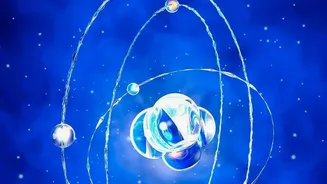
Here's where it gets strange. Neutrinos come in three distinct types, or 'flavors': electron, muon, and tau. The discovery that earned the 2015 Nobel Prize in Physics is that neutrinos can spontaneously change from one flavor to another as they travel. This phenomenon is called neutrino oscillation. Imagine throwing a cricket ball that changes from red to white to green mid-flight. That’s essentially what neutrinos do. This ability to oscillate proves that neutrinos have mass, a fact that challenged the original Standard Model of particle physics. In the intensely crowded core of a supernova, neutrinos are so numerous that they can even interact with each other, triggering rapid, collective oscillations.
How Oscillations Change Everything
This flavor-changing behaviour could be the hidden variable that determines a star's fate. Different neutrino flavors interact with matter differently. If a less interactive flavor of neutrino transforms into a more interactive one at a crucial moment, it could deposit more energy into the stellar material, providing the extra push needed for a successful explosion. Conversely, if the change goes the other way, it might rob the shockwave of the power it needs, causing the explosion to fizzle and the core to collapse into a black hole. Recent studies suggest that including these flavor conversions in models makes supernova explosions less likely for some massive stars, potentially explaining why astronomers have observed fewer supernovae than expected and why some neutron stars have lower masses than predicted.
The Challenge of 3D Simulation
This brings us to the final piece of the puzzle: our computer models. For decades, the immense complexity of supernovae forced scientists to simulate them in one or two dimensions, essentially treating the star as a perfect, non-rotating sphere. But real stellar collapses are chaotic, turbulent, three-dimensional events. Accurately modeling the flow of matter and the incredibly complex physics of neutrino transport in 3D requires staggering amounts of computational power. Early 3D models have shown that achieving an explosion is actually more difficult than in 2D simulations, highlighting how crucial dimensionality is. Incorporating the nuances of neutrino oscillations into these already demanding 3D simulations is the next frontier. It’s a challenge that pushes supercomputers to their absolute limits, but it’s essential for a complete picture.