


A Tale of Two Timelines
Mahindra & Mahindra recently celebrated a significant achievement at its state-of-the-art manufacturing plant in Chakan, near Pune, by rolling out its three-millionth vehicle. But the real story lies not in the total number, but in the incredible acceleration
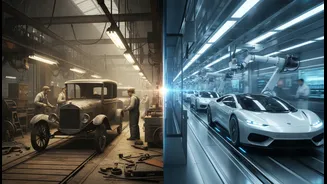
of its production pace. The first one million vehicles produced at the plant took 107 months, which is nearly nine years. In stark contrast, the most recent one million units were manufactured in just 27 months—a little over two years. This dramatic reduction in time, by a factor of four, signals a profound transformation in the plant's operational efficiency and capacity. The landmark three-millionth vehicle to roll off the line was a BE 6 electric SUV, a symbolic nod to the company's future-forward direction.
The Foundational Years
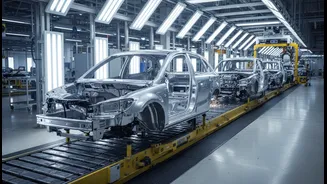
When the Chakan plant began operations in December 2009, it represented a major step for Mahindra's manufacturing ambitions. Spread over a vast 657 acres, the facility was designed to be a modern hub for vehicle production. However, building momentum takes time. The initial phase, which saw the production of the first million vehicles, was about establishing robust processes, training a workforce, and navigating the complexities of supply chains. Taking 107 months to reach this first major milestone set a baseline for what was then a newly established, large-scale operation. It was a period of steady, foundational growth rather than the explosive speed that would come to define its later years.
Engineering Hyperspeed
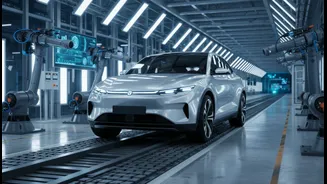
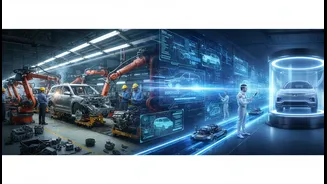
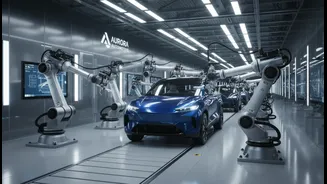
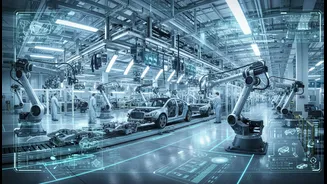
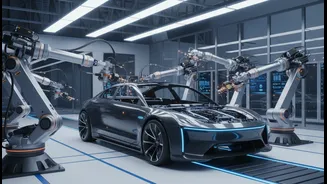
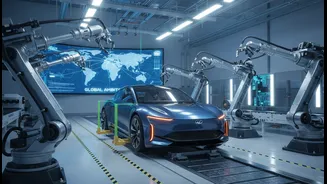
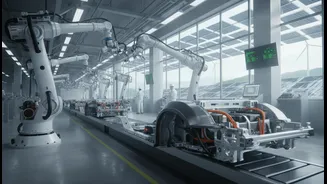
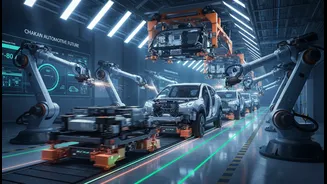
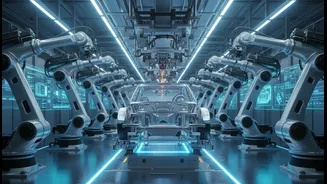
The secret behind the leap from 107 months to 27 is a concerted embrace of advanced manufacturing principles and technology. The Chakan facility has evolved into a showcase for Industry 4.0 technologies. Central to this transformation is the extensive use of automation; the plant now boasts 1,500 robots, leading to an automation level of over 98% in some areas. This high degree of automation not only speeds up the assembly process but also ensures consistent quality and precision, which is critical when producing a wide array of models. This technological leap has been the primary driver in shrinking production timelines so drastically.
Flexibility is the New Forte
Speed is only part of the equation. The Chakan plant's other great strength is its remarkable flexibility. The facility is designed to support the production of 19 different vehicle models and over 450 variants under one integrated roof. This includes a diverse mix of internal combustion engine (ICE) passenger cars, commercial vehicles, and the company's growing portfolio of electric vehicles. Different models can be assembled on the same production lines, allowing Mahindra to pivot quickly based on market demand. This flexibility eliminates the need for lengthy and costly re-tooling periods, ensuring that the factory's output is always aligned with what customers are buying.
A Blueprint for the Future
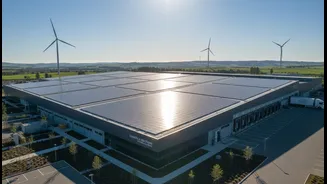
The transformation at Chakan is more than just an internal success story for Mahindra; it stands as a powerful case study for the 'Make in India' initiative. The plant's efficiency enables the company to compete on a global scale, particularly as it expands its electric vehicle offerings and partnerships with international brands. Furthermore, the facility demonstrates that high-speed production can coexist with sustainability. The plant sources over 50% of its energy from renewables and has achieved a 'Zero Waste to Landfill' status, proving that modern manufacturing can be both fast and responsible. This achievement solidifies Chakan's role not just as a production hub, but as a blueprint for the future of Indian automotive manufacturing.