




A Tale of Two Stages
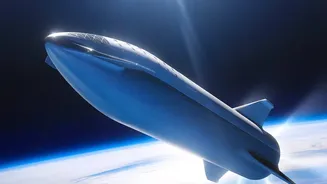
The mission plan for Starship Flight 15 was audacious: launch the world's most powerful rocket, send the upper stage into orbit for nearly a day, and then bring both giant pieces back to the Texas launch site to be caught mid-air by the launch tower's
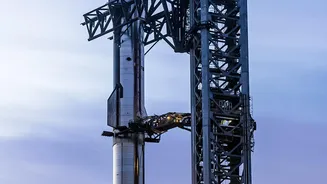
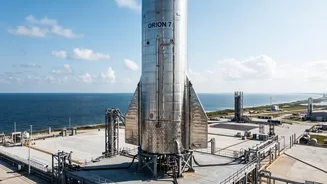
massive robotic arms. One half of this ambitious goal was a spectacular success. After spending 22.5 hours in orbit and deploying a batch of Starlink satellites, the Starship upper stage (named Ship 42) successfully re-entered the atmosphere, navigated its way back to Starbase, and was gently caught by the 'Mechazilla' tower. It marked the first time an orbital-class upper stage had ever been recovered this way. The other half of the mission, however, ended in the Gulf of Mexico. The Super Heavy booster, the first stage of the rocket, did not make it back to the tower.
The Controlled Diversion
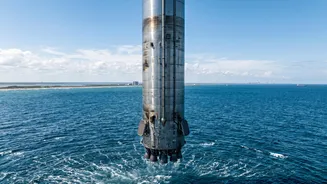
Shortly after separating from the Starship upper stage, the Super Heavy booster began its complex journey home. It performed a flip maneuver and initiated a 'boostback burn' to reverse its course and aim for the launch site. But something went wrong. According to SpaceX, a low-fuel-mass alarm triggered during this burn, causing it to end prematurely. The booster's guidance, navigation, and control (GNC) system immediately recognized that it could not safely reach the precise coordinates required for a tower catch. Instead of risking the launch infrastructure, the system did exactly what it was designed to do in such a scenario: it automatically aborted the catch attempt and steered the booster toward a pre-planned safe splashdown zone in the Gulf of Mexico. After performing a final landing burn, the booster was intentionally destroyed.
Why Catch a Rocket?
The entire 'catch' concept is central to SpaceX's business model and its goal of making humanity multi-planetary. Landing a rocket booster on legs, as the company's Falcon 9 rockets do, is impressive, but it’s not fast enough for the vision behind Starship. The goal is airline-like operations, with turnaround times measured in hours or days, not weeks. Catching the booster directly with the launch tower arms—nicknamed the 'chopsticks'—eliminates the need for heavy landing legs on the vehicle, saving mass that can be used for payload instead. More importantly, it places the booster exactly where it needs to be for inspection, refueling, and integration with a new upper stage. This rapid reusability is what could drastically lower the cost of access to space, making missions to the Moon and Mars economically feasible.
Success in 'Failure'
For any other aerospace program, a booster ending up in the ocean might be seen as a major failure. For SpaceX, it is a valuable learning experience. The company’s entire development philosophy is built on a rapid, iterative cycle: build, fly, learn from what breaks, and repeat. This hardware-rich approach allows engineers to gather real-world data from flight tests, which is far more valuable than simulations alone. While the booster was lost, it flew successfully through the most challenging parts of its ascent and return, and its automated abort system worked perfectly to protect ground assets. This data is critical for refining the process. The successful catch of the Starship upper stage, a much more difficult feat involving a return from orbital velocity, proves the fundamental mechanics of the system work under the most demanding conditions.