



The Old Way vs. The New Way
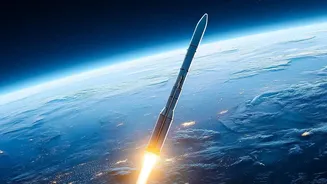
For most of spaceflight history, getting to orbit was an incredibly wasteful and expensive process. A rocket, a magnificent piece of engineering, would fire its payload into space, and its massive, costly components would be discarded, burning up on reentry
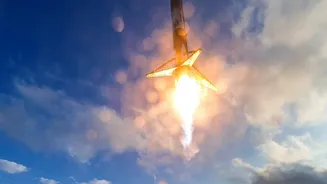
or sinking to the bottom of the ocean. It was like flying a commercial airliner from Mumbai to Delhi and then throwing the plane away. Reusable rockets change this fundamental model. Pioneered most famously by SpaceX with its Falcon 9, the core concept involves designing the most expensive parts of the rocket, particularly the first-stage booster, to return to Earth for an autonomous landing after launch. These boosters can then be inspected, refurbished, and flown again, turning a single-use piece of hardware into a recurring asset.
The Unbeatable Economics of Reusability
The primary driver of this shift is cost. Building an entirely new orbital-class rocket for every single mission is astronomically expensive. By reusing the first stage, which can account for a huge portion of the rocket's manufacturing cost, launch providers can dramatically slash the price of accessing space. Twenty years ago, launching one kilogram into orbit could cost over $10,000; today, reusable rockets have pushed that figure below $2,720, with projections suggesting it could fall even further. For example, a reusable Falcon 9 launch is advertised at around $67 million, while a comparable expendable rocket from a competitor can cost well over $100 million. This cost reduction doesn't just make existing missions cheaper; it creates entirely new markets that were previously economically impossible.
Meeting the Surging Demand for Space
The falling cost of launch is happening just as demand for space access is exploding. Private companies are deploying vast 'mega-constellations' of thousands of satellites to provide global internet coverage. In fact, commercial clients now account for a dominant share of launch activity. The demand for Earth observation, in-orbit logistics, scientific research, and even the first steps towards space tourism is growing rapidly. U.S. orbital launch demand alone has surged past 180 launches per year. Without the ability to reuse rockets and launch them frequently—SpaceX launched a Falcon 9 every few days in 2026—meeting this demand would be impossible. Reusability provides the high flight cadence needed to build and maintain these ambitious new space infrastructures.
The Pioneers and the Challengers
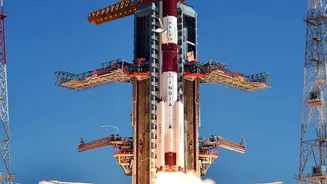
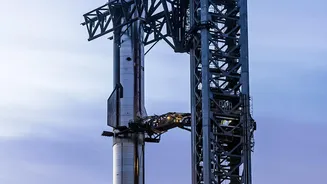
While SpaceX has a commanding lead with its Falcon 9 and the development of its fully reusable Starship, it is no longer the only player. Blue Origin, founded by Jeff Bezos, is developing its heavy-lift New Glenn rocket, which also features a reusable first stage. Rocket Lab has successfully demonstrated recovery and reuse for its smaller Electron rocket. Meanwhile, state-backed programs in China are also mastering the technology, successfully recovering boosters. In India, ISRO is making steady progress with its own Reusable Launch Vehicle (RLV) technology demonstrator, named 'Pushpak'. It has successfully completed a series of autonomous landing experiments, proving its capabilities in critical technologies needed for a future orbital vehicle. This growing competition signals a wider industry consensus: reusability is the future of space launch.
The Challenges of Flying Again
While the benefits are clear, making rockets reusable is not easy. The technical hurdles are immense, from developing robust thermal protection systems to withstand the fiery heat of reentry, to perfecting autonomous landing capabilities under difficult conditions. Beyond the initial recovery, the refurbishment process is key. The goal is an airline-like turnaround, but currently, inspecting and replacing components between flights is still a costly and time-consuming process. Ensuring that a rocket that has flown multiple times is just as safe and reliable as a new one is the most critical challenge of all. Each successful flight, however, provides valuable data, allowing engineers to improve designs and increase confidence in the systems over time.