






The Power of Peppermint
Peppermint tea is more than just a refreshing beverage; it's a versatile tool for well-being. Naturally caffeine-free, it's an excellent choice for staying hydrated throughout the day. The menthol in peppermint has natural relaxing properties that can
help soothe both body and mind, making it a great option when you feel tense. When stress manifests as physical discomfort like headaches or an upset stomach, peppermint tea can offer relief. Its ability to calm digestive muscle spasms makes it a go-to for soothing the gut, which is often affected by stress. For a simple and effective brew, just steep fresh or dried peppermint leaves in hot water for five to ten minutes.
Calm with Chamomile
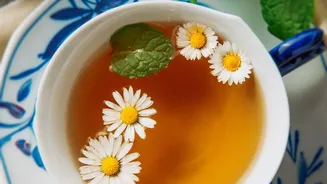
Chamomile is perhaps the most famous of all calming teas, and for good reason. For centuries, it has been used to promote relaxation and improve sleep. This daisy-like flower contains a compound called apigenin, which binds to receptors in the brain to help reduce anxiety and induce a sense of calm. Studies have shown it can improve overall sleep quality, making it an ideal addition to your bedtime routine. Beyond its sedative effects, chamomile also possesses anti-inflammatory properties that can soothe digestive issues often exacerbated by stress, like indigestion and gas. A warm cup about an hour before bed can be a gentle and effective way to prepare for a restful night.
Hydrating Hibiscus
With its vibrant ruby colour and tart, cranberry-like flavour, hibiscus tea is a sensory delight that also packs a wellness punch. It is naturally caffeine-free and makes staying hydrated more enjoyable. Many find that its refreshing taste helps them increase their daily fluid intake. Hibiscus is also rich in antioxidants, which help protect the body from stress. It can be enjoyed hot or cold, making it a perfect year-round beverage. Served over ice, it's a particularly refreshing alternative to sugary juices and sodas on a warm day. Traditionally, it has also been used to support the body's natural cleansing processes.
Soothing Ginger
When stress ties your stomach in knots, ginger tea can be a powerful ally. Ginger is renowned for its ability to soothe digestive discomfort, from nausea to bloating. Since the gut and brain are closely linked, calming digestive distress can have a corresponding calming effect on the mind. The active compounds in ginger also have anti-inflammatory properties, which can help ease physical tension that builds up from chronic stress. The simple ritual of preparing and sipping a warm mug of ginger tea can itself be a grounding practice, offering a moment of mindfulness in a hectic day. You can make a simple tea by simmering fresh ginger slices in water.
Relaxing Lavender
While often associated with aromatherapy, lavender is also a wonderful herb for a calming tea. The same aromatic compounds that make its scent so relaxing, like linalool, also work internally to ease anxiety and stress. Drinking lavender tea can help reduce levels of the stress hormone cortisol, allowing your body's 'rest and digest' system to take over. This makes it particularly effective for situational anxiety or as part of a wind-down routine before sleep. To brew, steep one to two teaspoons of dried lavender buds in hot water for five to ten minutes for a floral, soothing experience.
Lifting with Lemon Balm
A member of the mint family, lemon balm offers a bright, citrusy flavour and a long history of use for improving mood and reducing stress. Research suggests that compounds in lemon balm may help reduce feelings of anxiety and promote a sense of calm. It is often used to ease nervous tension and support restful sleep without causing heavy sedation. The act of brewing and sipping this fragrant tea provides a calming ritual in itself. For those looking for a gentle way to uplift their spirits and soothe a frazzled nervous system, lemon balm tea is an excellent choice.