








The Pervasive Problem of Adulteration
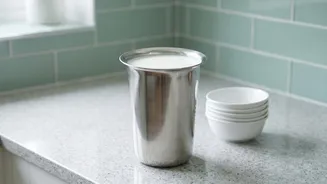
The issue of milk adulteration is a recurring concern across India. Recent reports and crackdowns continue to highlight how easily this essential food item can be tampered with. Adulterants are added for various reasons: water to increase volume, or substances
like urea and detergents to mimic the thickness, colour, and froth of pure milk after it has been diluted. These additions aren't just deceptive; they can be dangerous. Consuming milk laced with chemicals like detergents, formalin, or urea can lead to a host of health issues, from gastrointestinal problems and digestive distress to more severe long-term organ damage, including to the kidneys and liver. Even simple dilution with contaminated water reduces nutritional value and can introduce harmful bacteria.
Simple Home Tests for Peace of Mind
You don't need a laboratory to perform basic checks on your milk. The Food Safety and Standards Authority of India (FSSAI) recommends several simple tests you can do at home. The Water Test: Place a drop of milk on a polished, slanting surface. Pure milk will flow slowly or stay put, leaving a white trail behind. Milk adulterated with water will flow down immediately without leaving a mark. The Detergent Test: Take 5-10 ml of milk, add an equal amount of water, and shake it vigorously in a closed bottle. If a dense, thick lather forms that persists, it may contain detergent. Pure milk will only form a thin layer of foam that disappears quickly. The Starch Test: Some suppliers add starch to make diluted milk appear thicker. To check for this, boil a small sample of milk and let it cool. Then, add a few drops of iodine tincture. If the milk turns blue, it indicates the presence of starch. The Synthetic Milk Test: Synthetic milk, made from chemicals to imitate real milk, often turns yellowish upon heating and can feel soapy when rubbed between your fingers. It may also have a bitter or chemical aftertaste.
Checking for Urea
Urea, which can harm the kidneys, is sometimes added to whiten milk and increase its protein content reading. A simple test can help detect it. Take a teaspoon of milk in a test tube and add half a teaspoon of soybean or arhar dal powder. Shake the mixture well and let it stand for five minutes. Afterwards, dip a red litmus paper into the solution for 30 seconds. If the paper turns blue, it confirms the presence of urea.
Beyond Adulteration: The Importance of Storage
Even pure milk can become unsafe if not stored correctly. Proper storage is crucial to prevent bacterial growth and spoilage. The most important rule is to maintain a cold temperature, ideally between 0°C and 4°C. Always store milk on the shelves in the back of the refrigerator, where the temperature is coldest and most stable, rather than in the fridge door, which is subject to frequent temperature fluctuations. Keep the milk in its original container to protect its flavour and nutritional value, and ensure the lid is tightly sealed to prevent it from absorbing odours from other foods. Once a carton is opened, it should ideally be consumed within three days. Never return unused milk from a serving pitcher back into the original container, as this can introduce bacteria and spoil the entire batch.