



An Ice Age in Reverse
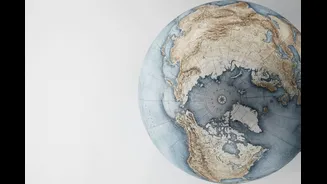
When we think of an ice age, we often picture vast, continent-spanning glaciers. For thousands of years, Earth has been in a warm 'interglacial' period, and scientists have long debated when the next deep freeze might naturally begin. According to a new
study, we may have missed its start entirely. Researchers found compelling evidence that a new glacial period quietly began about 2,000 years ago. However, this natural cooling trend didn't just stop; it dramatically reversed course around the 1960s, coinciding with the sharp rise in temperatures driven by human activity. In effect, modern global warming appears to have cancelled an ice age that was already getting underway.
Reading Clues in Ancient Plants
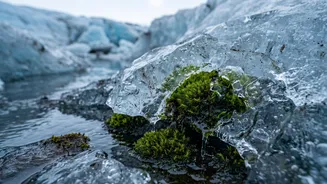
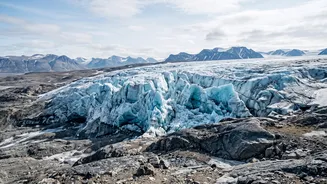
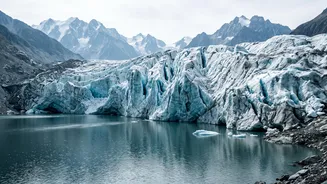
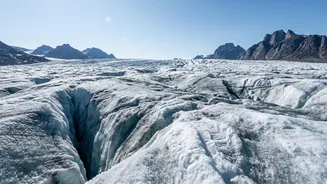
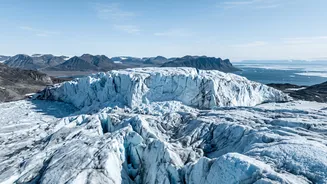
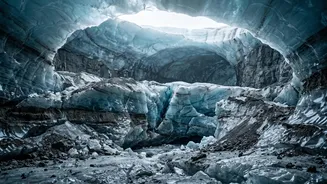
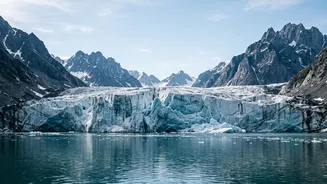
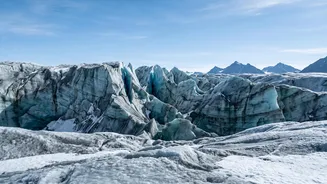
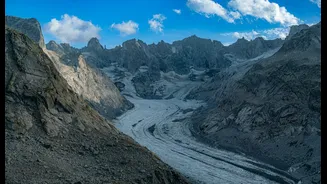
The discovery hinges on the last remnant of a colossal ice sheet that once covered North America. Known as the Barnes Ice Cap on Canada's Baffin Island, this Delaware-sized patch of ice is what's left of the mighty Laurentide Ice Sheet from the last major ice age. Scientists from the Columbia Climate School's Lamont-Doherty Earth Observatory studied ancient vegetation that had been entombed in ice. As the glacier naturally expands and contracts, it either buries or exposes the plant life beneath it. By using radiocarbon dating on these perfectly preserved mosses and plants, the research team could create a precise timeline of the ice cap's movements over centuries. This natural archive provided a clear history of when the ice advanced and when it retreated.
The Ghost of an Ice Sheet
The data revealed a clear pattern. After shrinking to its smallest size around 3,000 years ago, the Barnes Ice Cap began to grow again. For nearly two millennia, the ice slowly expanded, accumulating more mass in winter than it lost in summer. This slow, steady growth is what researchers argue was the very beginning, or inception, of a new glacial period. Earth's natural orbital cycles, known as Milankovitch cycles, had created conditions cool enough for the ice to start advancing again. This finding challenges previous climate models that suggested the next ice age was still thousands of years in the future. The new evidence proposes that the starting bell had already rung, albeit very quietly.
A Cycle Interrupted by Us
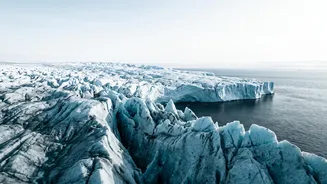
The timeline constructed from the ancient plants showed this period of glacial expansion came to an abrupt end. Around 1960, the trend flipped. Suddenly, the ice cap started losing more ice in the summer than it could gain in the winter, leading to a rapid retreat that continues today. This lines up perfectly with the acceleration of global warming caused by the burning of fossil fuels. According to the researchers, the warming was so powerful that it overwhelmed the natural cooling cycle that had been in place for 2,000 years. As geochemist Nicolás Young, a lead author of the study, put it, this is a powerful example of how humanity has 'jolted the system'. The study essentially vindicates some scientists from the 1970s who, looking at long-term climate cycles, speculated that a new ice age might be approaching, without realizing the extent to which human emissions were already counteracting it.
What This Means for Our Future Climate
This finding does not mean we should welcome global warming as a saviour from a deep freeze. A natural glacial period takes thousands of years to fully manifest, a slow process the planet is adapted to. In contrast, human-driven climate change is causing rapid, destabilising shifts. The complete melting of the Barnes Ice Cap, which models predict could happen within a few centuries, would be significant. This ice cap served as a 'nucleation point', a seed from which a larger ice sheet could grow. Its disappearance could alter the dynamics of how and when future ice ages might occur, long after the effects of current emissions have played out. The study underscores the profound and perhaps permanent impact humans are having on Earth's fundamental climate rhythms, overriding natural cycles that have governed the planet for millions of years.