


An Aging Powerhouse Gets a Boost
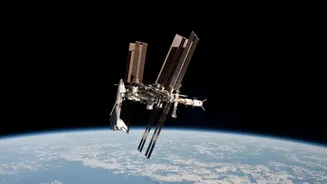
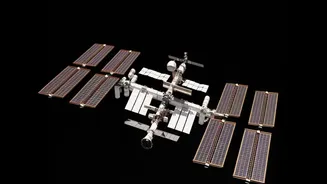
For over two decades, the International Space Station (ISS) has relied on eight massive solar arrays, each stretching 112 feet, to power everything from life support to groundbreaking science experiments. These original wings were designed for a 15-year
lifespan. While they have performed remarkably well, their output has been gradually degrading due to the harsh environment of space. To ensure the station could continue to operate as a world-class laboratory and support an increasing number of complex experiments, NASA and its partners knew a power upgrade was essential. Before the new installations, the original arrays were generating about 160 kilowatts of power.
Rolling Out a Modern Solution
The solution came in the form of six new, more advanced solar arrays called ISS Roll-Out Solar Arrays, or iROSAs. Developed by Redwire under contract with Boeing, these arrays use newer, more efficient solar cell technology. A key innovation is their design; they launch rolled up in a compact cylinder and unfurl like a yoga mat, a process driven by the stored energy in their composite booms rather than complex motors. Despite being smaller than the original arrays, each pair of iROSAs adds significant power. The entire project was a multi-year effort, with the first pair of arrays being installed back in June 2021.
A High-Stakes Installation
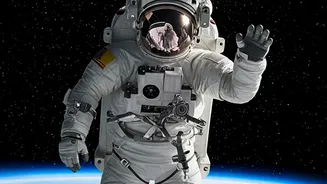
Installing the new arrays was a monumental task, requiring a series of carefully choreographed spacewalks by astronauts. The final installation, completed on November 5, 2026, was performed by NASA astronaut Anil Menon and Canadian Space Agency astronaut Joshua Kutryk. Their seven-hour spacewalk saw them retrieve the 750-pound iROSA assembly, transport it via the Canadarm2 robotic arm, and meticulously bolt it into place over one of the station's original solar arrays. This final spacewalk was the culmination of a years-long effort involving multiple astronaut crews and 18 separate spacewalks to prepare the station's power channels and install all eight arrays.
More Power, More Science
With all eight iROSAs now deployed, the station’s total power generation capacity has increased by about 30 percent, from 160 kilowatts to approximately 215 kilowatts. This extra electricity is critical for powering the hundreds of research investigations happening on board. The boost will support more complex experiments in fields like materials science, fluid dynamics, and biotechnology, which often require higher energy inputs. It also enables the use of advanced systems, from new scientific instruments to technologies that will be vital for future missions to the Moon and Mars, for which the ISS serves as an essential testbed.
The Final Chapter Before a Fiery Farewell
This power upgrade is designed to keep the ISS fully operational and scientifically productive through its planned retirement at the end of the decade. The current plan, agreed upon by NASA and its international partners, is to deorbit the station in a controlled and targeted manner around 2030. After its long and storied service, the station will be guided into a remote, unpopulated area of the South Pacific Ocean. This upgrade ensures that until that final day, the ISS can continue to return enormous scientific and technological benefits, solidifying its legacy and paving the way for the next generation of commercial space stations that will follow in its orbital path.